






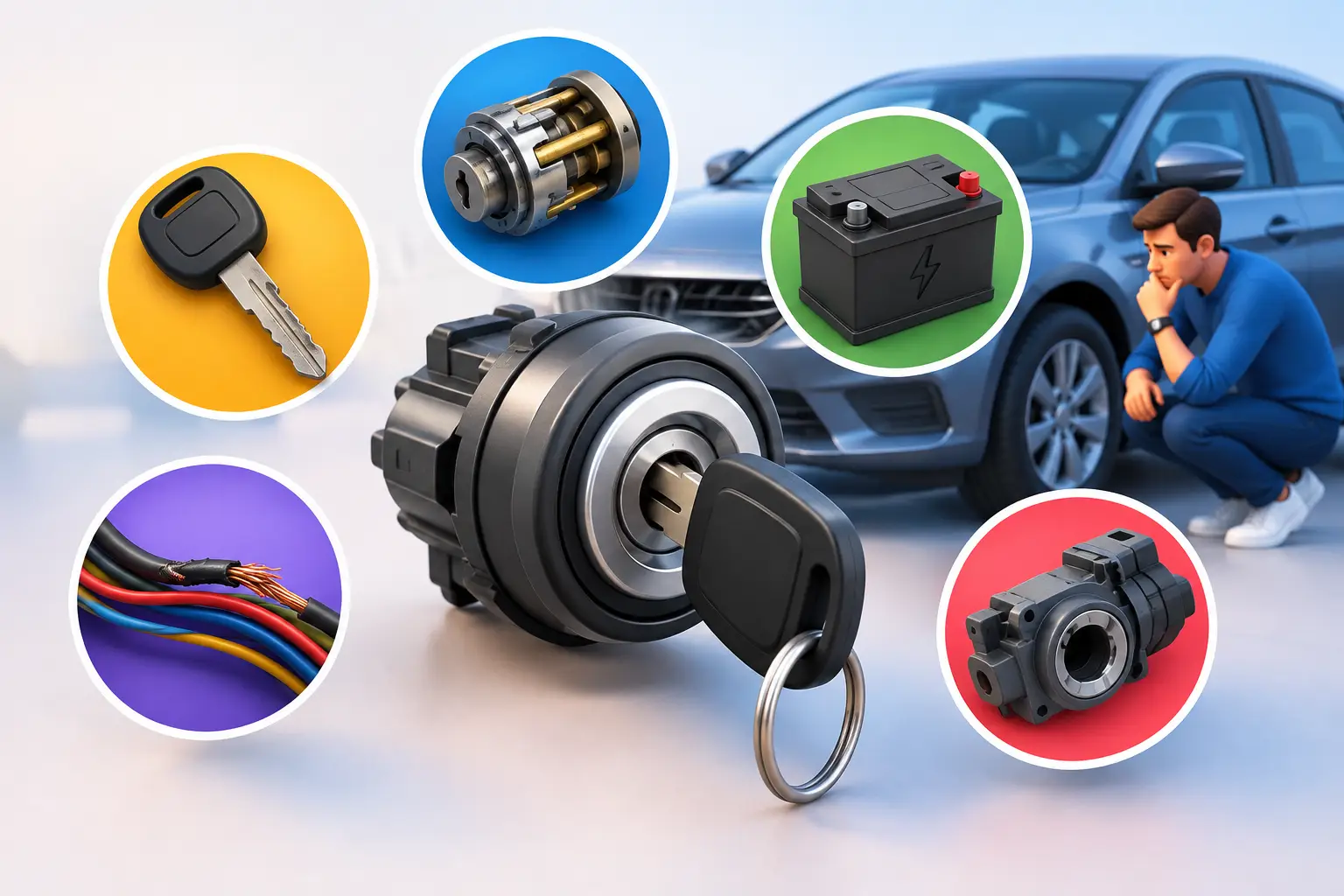
A key that suddenly will not turn can stop a normal day in its tracks. You may be parked at work, picking up kids, or ready to start a rideshare shift when the ignition refuses to cooperate. Understanding the top ignition key failure causes can help you avoid damaging the key or ignition further and get the right fix faster.
The first question is simple: is the key physically stuck, will it turn but not start the vehicle, or does a smart key fail to be recognized? Those symptoms point to different problems. Modern vehicles also add an immobilizer system, so a key can look perfect, turn normally, and still be unable to start the engine.
Top Ignition Key Failure Causes: Mechanical Problems
Mechanical problems happen at the key blade, the ignition cylinder, or both. They are common on older keyed ignitions, but they can also affect the emergency key inside a modern Toyota or Lexus smart key.
A worn, bent, or damaged key blade
A traditional metal key works because its cuts line up precisely with tiny pins inside the ignition cylinder. After years of use, those edges can wear down. A key may still open the door yet struggle to turn the ignition because the ignition pins require a more exact match.
Bending, cracking, or twisting a key makes the problem worse. A bent key can bind inside the cylinder, and forcing it can break the blade off. If you have a spare key, try it gently. If the spare works and the daily-use key does not, the worn key is likely the issue. A new key needs proper cutting, and on many vehicles it also needs transponder programming before it can start the car.
A worn ignition cylinder
An ignition cylinder wears internally every time a key enters, turns, and is removed. The pins and springs can eventually become sticky or worn enough that even a correctly cut key will not turn consistently. You might notice that the key works after several attempts, requires a slight wiggle, or only turns when inserted at a certain angle.
That is not a reason to keep trying harder. Repeated force can damage both the cylinder and the only key you have. A locksmith can inspect whether a fresh key cut resolves the issue or whether the ignition cylinder itself needs repair or replacement.
Dirt, debris, or the wrong key
Pocket lint, dirt, and small debris can enter an ignition keyway. So can pieces of a broken key. A quick look with a flashlight may reveal an obvious obstruction, but do not poke inside with paper clips, pins, or other metal objects. That can move debris deeper or damage internal components.
It also happens more often than people expect: a similar-looking key gets inserted by mistake. Before assuming the ignition has failed, confirm you have the correct vehicle key and that the blade has not been accidentally swapped with another key ring.
Steering wheel pressure locking the ignition
If the steering wheel was turned hard after the vehicle was shut off, pressure can lock the wheel and prevent the key from turning. This is especially common when parked on an incline or with the front tires against a curb.
Hold the brake, gently move the steering wheel left and right, and turn the key at the same time. Do not yank the wheel or twist the key aggressively. If the wheel is locked under pressure, a small movement in the right direction can release it. If nothing changes, stop before the key bends or snaps.
When the Ignition Turns but the Car Will Not Start
A turning key does not always mean the vehicle recognizes it. Many late-model vehicles use a transponder chip, remote fob, or proximity smart key that communicates with the immobilizer. The metal blade may turn the ignition or unlock the door, but the engine will stay disabled if the electronic authorization fails.
A failed or unprogrammed transponder chip
A transponder chip is a small electronic component built into many vehicle keys. It sends a coded signal to the vehicle when you try to start it. If the chip is damaged, missing, incompatible, or not programmed to your vehicle, the engine may crank but not start. In some models, a security light will flash or remain illuminated.
This can happen after a key shell replacement if the original chip was not transferred correctly. It can also happen when an inexpensive replacement key is cut but never programmed. Cutting the blade only handles the mechanical side. The immobilizer still needs the correct electronic key data.
A weak smart key or key fob battery
For push-button-start vehicles, a weak fob battery can keep the vehicle from detecting the smart key reliably. Symptoms often include reduced remote range, intermittent lock and unlock response, a “key not detected” message, or a no-start condition even while the fob is inside the vehicle.
Try the vehicle's backup starting procedure, which is often holding the fob against or near the start button while pressing the brake and button. The exact location varies by model. If this works, replace the fob battery soon. If a new battery does not help, the fob, its internal circuit, or the vehicle's receiver may need professional diagnosis.
Water damage or a cracked remote fob
Keys and fobs spend a hard life in pockets, cup holders, bags, and on the ground. Water exposure, a washer cycle, cracked housing, or a hard drop can damage the circuit board or battery contacts. Sometimes a fob works intermittently for days before failing completely.
Do not assume a damaged fob must be replaced without checking it. In certain cases, a key shell, battery contact repair, or transfer of working internal components is enough. If the electronics are damaged, a replacement key must be programmed to the vehicle before it will perform all functions.
Problems That Feel Like Key Failure but Are Not
Not every no-start is an ignition key problem. A weak vehicle battery, failed starter, brake-switch issue, ignition switch fault, or electrical wiring problem can create similar symptoms. For example, if dash lights are dim or the vehicle makes rapid clicking sounds, the car battery may be the real issue.
A few details make diagnosis faster:
- If the key will not insert or turn, suspect the key blade, cylinder, debris, or steering lock.
- If the key turns but the engine does not crank, consider the battery, starter circuit, ignition switch, or park/neutral safety system.
- If the engine cranks but does not start and a security light appears, suspect the transponder or immobilizer.
- If a push-button-start vehicle says the key is not detected, start with the fob battery, then check the fob and vehicle recognition system.
A qualified automotive key specialist can determine whether you need a key repair, duplicate, programming service, ignition work, or a separate vehicle repair. That distinction matters because replacing a key will not solve a failed starter, and replacing an ignition cylinder will not fix an unprogrammed smart key.
What to Do When Your Ignition Key Fails
Start by staying gentle. Do not spray household lubricants into the ignition, hammer the key, force the steering wheel, or use a bent blade as a lever. Those shortcuts can turn a straightforward key issue into a broken-key extraction or ignition replacement.
If you have a spare, test it without forcing it. For a smart key, replace the battery and try the manufacturer's backup start method. If the issue is intermittent, take note of what happens: whether the key turns, whether the dash lights come on, whether the engine cranks, and whether you see a security warning. Those details help a technician arrive prepared.
If every key is lost, broken, or no longer recognized, mobile automotive key service can often create and program a replacement at the vehicle. Smartkeys handles modern transponder and smart key situations, including all-keys-lost cases, with the cutting and programming work needed to restore access and starting capability.
Preventing the Next Key Problem
Use a light key ring when possible. A heavy bundle of keys and accessories can add strain to a traditional ignition cylinder over time. Keep your spare key somewhere secure rather than in the vehicle, and test it occasionally so you know it is still cut and programmed correctly.
For smart keys, replace weak batteries before they fully die and use a protective shell if the fob is cracked or frequently dropped. If your key starts sticking, responding inconsistently, or showing visible wear, address it early. A working duplicate is usually simpler and less stressful than solving a total lockout in a parking lot.
Your car should not be held hostage by a damaged blade, dead fob, or failed chip. Treat early warning signs seriously, keep a tested spare, and get specialized help before a small key problem leaves you stranded.