





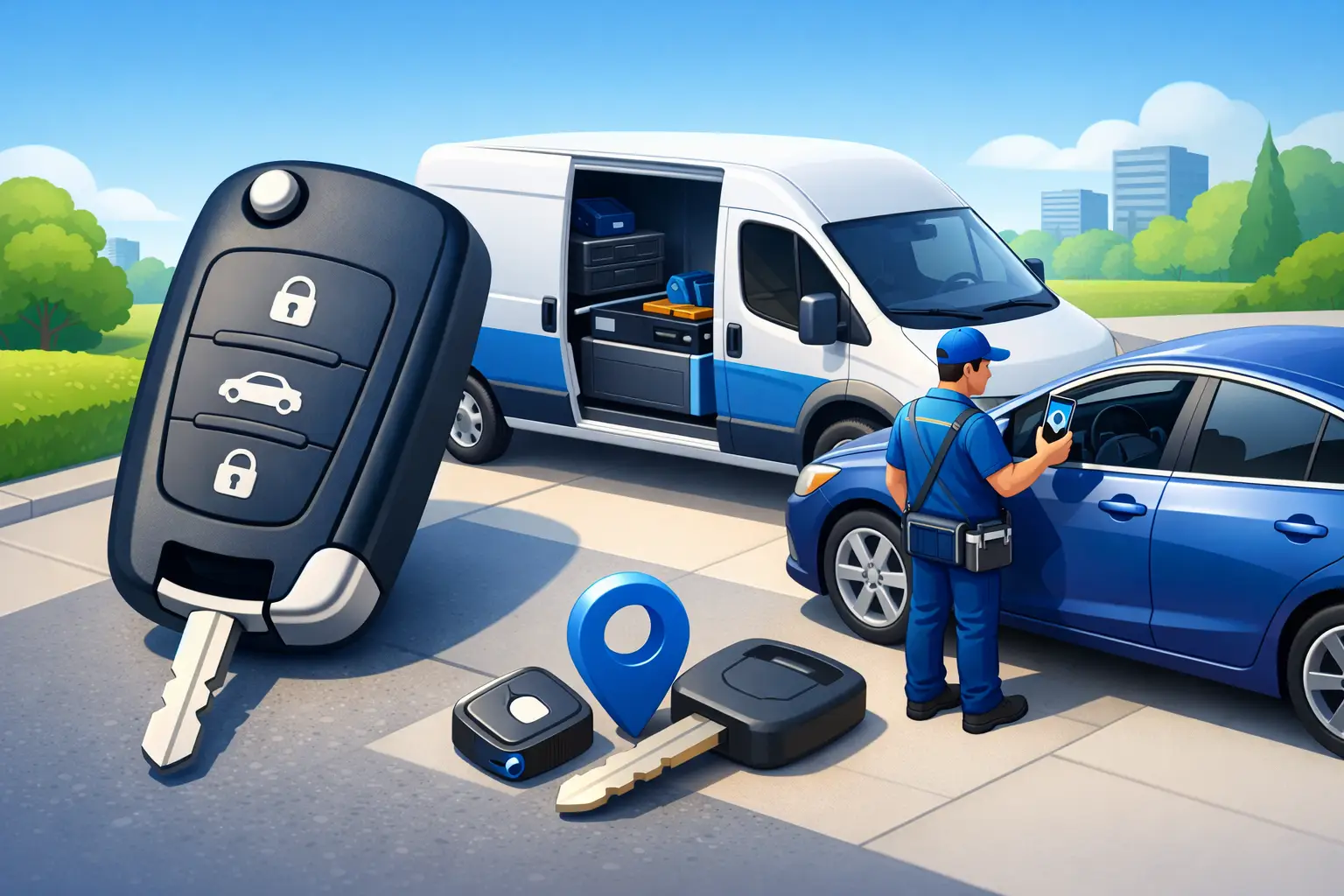
A missing key can stop a normal day in seconds. You may be outside your office, at home before a school pickup, or parked after a late shift with no way to start the car. A mobile car key replacement service brings the equipment, replacement key options, and programming knowledge to your vehicle, so you do not have to arrange a tow or wait at a dealership counter.
For modern Toyota and Lexus owners, the job is rarely just cutting a piece of metal. Smart keys, remote fobs, and transponder keys communicate with the vehicle's immobilizer. The new key must be matched correctly before the engine will start. That is why the right mobile specialist matters when every minute without your car creates a problem.
What a Mobile Car Key Replacement Service Does
Mobile key service is designed around the fact that a vehicle with no working key usually cannot come to a shop. A qualified automotive locksmith travels to the vehicle with diagnostic tools, key-cutting equipment, compatible keys or remotes, and programming devices. The goal is to restore access and starting capability where the car is parked.
The exact work depends on the vehicle and the condition of the key you have. A lost traditional key may need cutting and a new transponder chip programmed. A push-button-start vehicle may need a smart key added to the vehicle's security system. If the remote works but the emergency blade is damaged, a more focused repair or replacement may be enough.
This is especially useful when you have lost every key. An all-keys-lost situation requires more than copying an existing key. The technician may need to access vehicle security information, generate the correct key, program it to the immobilizer, and confirm that the car starts and the remote functions work as expected.
When Calling a Mobile Automotive Locksmith Makes Sense
The obvious reason to call is a completely lost key, but key trouble is not always that clear. A fob that works only intermittently, a cracked shell, buttons that no longer respond, or a key that starts the car only after several attempts can all become a roadside problem later.
Mobile service is often a practical choice in these situations:
- You lost your only working smart key, transponder key, or remote fob.
- Your key was stolen and you want the old key removed from the vehicle's system.
- A remote is damaged, water-exposed, cracked, or no longer locks and unlocks the doors.
- You need a spare key for a family member, teen driver, employee, or rideshare backup.
- Your emergency key blade is bent, broken, or missing.
A spare is not just a convenience item. It can prevent a much more involved all-keys-lost service later. For families sharing a vehicle or drivers who rely on a car for income, having a tested backup key is a small step that can save a major interruption.
Why Modern Keys Need More Than Basic Cutting
Older vehicle keys were largely mechanical. If the grooves were cut correctly, the key turned the ignition. Modern vehicle security is different. The visible key or fob is only part of the system.
Most late-model vehicles use an electronic identity inside the key. A transponder key contains a chip that must be recognized by the immobilizer. A proximity smart key communicates wirelessly when you press the start button or touch the door handle. If the electronic data is not programmed correctly, a perfectly cut emergency key may open the door but will not start the vehicle.
That distinction matters when comparing service options. A low-cost blank key is not automatically a working replacement. It must be compatible with your exact make, model, year, and key system. It also needs correct cutting when applicable, programming, and functional testing.
Toyota and Lexus keys can involve sophisticated encrypted or crypto electronic systems. The process varies by model year and platform, which is why a technician should verify the vehicle details before promising a price or timeline. Good service begins with accurate information, not guesswork.
What to Have Ready Before You Request Service
A mobile technician can usually move faster when the key details are clear from the start. You do not need to know technical terms. Your vehicle information is enough to point the service in the right direction.
Have the make, model, year, and current location ready. Let the locksmith know whether you have any working key at all, whether the car uses push-button start, and what happened to the original key. A clear photo of the remaining key or damaged fob can also help identify the correct replacement option.
You should also expect to provide proof that you own or are authorized to access the vehicle. This protects you, the vehicle owner, and the technician. A professional automotive key provider should not treat vehicle security as an afterthought.
If the key was stolen rather than simply misplaced, say so. In many cases, it may be possible to erase or disable the missing key from the vehicle's recognized-key list while adding the replacement. Whether that is available depends on the vehicle, but it is worth addressing for peace of mind.
Mobile Service Versus a Dealership
A dealership can replace many factory keys, but it is not always the fastest route when your car is sitting somewhere without a working key. You may need a tow, an appointment, and extra time for parts or programming. Costs can also rise quickly, particularly with smart keys and all-keys-lost situations.
A mobile automotive locksmith brings the service to the vehicle and can often handle cutting and programming in one visit. That can eliminate a tow and reduce the downtime between losing a key and driving again. For an urgent lockout or a key that will not start the car, convenience is more than a luxury.
Still, the best option depends on the vehicle and the job. Some uncommon keys, specialty parts, or unusual security issues may require ordering a specific item. A trustworthy provider will explain what is available now, what must be ordered, and what the work includes. Fast service should not mean vague pricing or unsupported promises.
Repair, Rekeying, or Replacement: Choosing the Right Fix
Not every key problem calls for a full replacement. If the internal circuit board and chip are still working, a cracked key shell may be repaired by moving the electronics into a new shell. That can be a cost-effective fix when the issue is physical wear rather than electronic failure.
A weak fob battery can also mimic a failing remote. If the buttons work only from very close range or stop responding unpredictably, battery testing is a sensible first check. But a new battery will not repair a damaged circuit board, worn buttons, or a key that is no longer recognized by the immobilizer.
Rekeying may be appropriate after a key is lost or stolen, particularly when you want to reduce the risk that an old key can still be used. With electronic keys, this often means changing the vehicle's authorized-key setup rather than only changing a physical lock. The right recommendation depends on your vehicle's hardware and security system.
At Smartkeys, the focus is on identifying the real problem first: key cutting, remote repair, immobilizer programming, a spare, or a complete all-keys-lost solution. That helps avoid paying for a replacement when a repair will do, while also avoiding a temporary fix that leaves you stranded again.
Questions Worth Asking Before the Technician Arrives
When you need help quickly, it is easy to focus only on arrival time. Ask a few direct questions so you know the service is a fit. Confirm that the provider handles your make, model, and year, and ask whether they can program the key on-site. If you have no working key, make sure they specifically handle all-keys-lost programming.
It is also reasonable to ask what the quoted price covers. A clear estimate should account for the replacement key or fob, cutting if needed, programming, and basic testing. If a key is being repaired, ask whether the existing electronics will be tested before a new shell or component is installed.
Finally, ask about the replacement itself. Aftermarket keys can be a practical, affordable choice when they are compatible and properly programmed. OEM options may be preferable for certain drivers or vehicle models. There is no single answer for every car, but there should be a clear explanation of the option being offered.
Protect Your Next Drive
Once your replacement key is working, test every function before the technician leaves. Lock and unlock the doors, open the trunk if applicable, use remote start if equipped, and confirm the vehicle starts reliably. Keep the emergency key blade accessible if your fob uses one, and store your spare somewhere separate from the primary key.
Lost your key, dealing with a failing fob, or ready to make a backup before you need one? Gather your vehicle details and service location, then contact a mobile automotive key specialist. The right key is not just a replacement part - it is your way back to the road.