






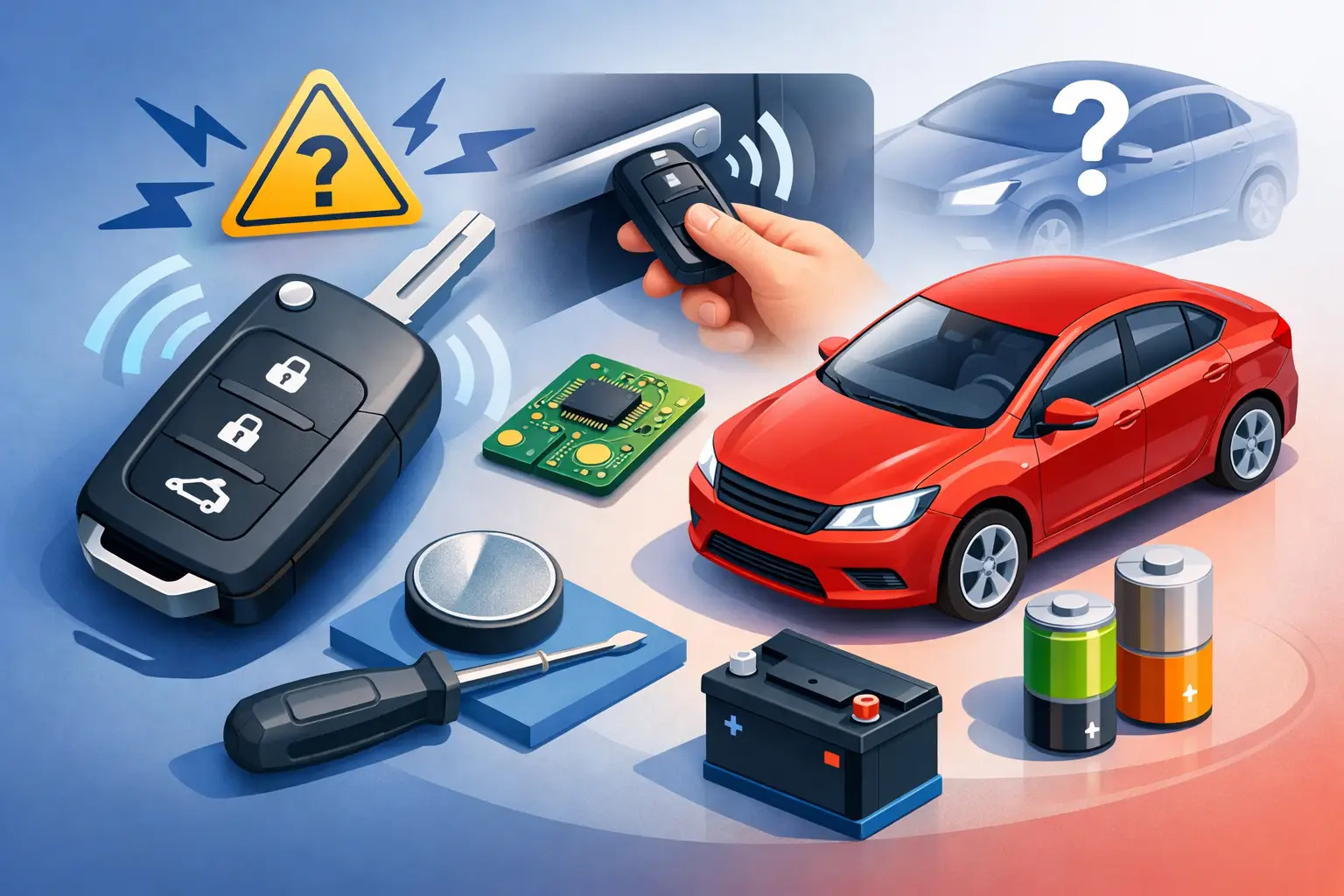
Your car is loaded, you are running late, and the doors do not respond. A car key fob not working is more than an annoyance when you depend on your vehicle for work, school, errands, or family plans. The good news is that many fob problems have a clear cause. Some take two minutes to check. Others point to a key that needs repair, programming, or replacement.
Start with the simple checks, but do not keep guessing if the vehicle will not start or the fob has stopped responding altogether. Modern keys communicate with the vehicle’s security system, and the right fix depends on whether the issue is power, physical damage, radio signal, or immobilizer programming.
Start With the Most Common Cause: The Battery
A weak coin-cell battery is the first thing to suspect when your fob works only at close range, requires repeated button presses, or stops working without warning. Most remote fobs use a small battery such as a CR2032, CR2025, or CR2450. The correct type varies by vehicle and key design, so check the existing battery before buying a replacement.
Open the fob carefully. Many have a small release for the emergency key and a notch in the case where the shell can be separated with a flat tool. Do not force the housing. Cracked tabs, damaged buttons, or a bent battery contact can turn a simple battery swap into a repair issue.
Install the new battery in the same direction as the old one, then test every function: lock, panic, trunk or liftgate, and remote start if equipped. If the fob works again but only from a few feet away, the battery may not be the whole problem. Internal damage or signal interference may be reducing its range.
Car Key Fob Not Working After a Battery Change?
A battery replacement normally does not erase programming. If your fob still does nothing after a fresh battery, check whether the battery is seated firmly and whether the metal contacts are clean and touching the battery correctly. A battery installed upside down is a common and easy-to-miss problem.
Also look closely at the fob’s circuit board and button pads. Moisture, corrosion, a drop on concrete, or years of pocket wear can damage internal components. A fob may look fine from the outside while a broken solder connection prevents it from transmitting a signal.
If the buttons work but the vehicle will not start, the remote portion of the key and the transponder or smart-key system may be acting differently. This distinction matters. The lock buttons can fail while the car still starts, or the buttons can work while the immobilizer prevents the engine from starting. A qualified automotive key specialist can test the key and identify which part of the system has failed.
Check the Vehicle Before Replacing the Fob
The key fob is not always the problem. A weak vehicle battery can interfere with smart-entry functions, central locking, and push-button start recognition. If the cabin lights are dim, the dash flickers, or the vehicle has been sitting for days, have the car battery checked as well.
Try your spare key if you have one. If the spare works normally, the issue is likely limited to the first fob. If neither key works, the vehicle may have a battery, receiver, fuse, door-lock, or security-system issue. That is a strong reason to stop buying random replacement fobs and get the vehicle diagnosed.
For push-button-start vehicles, hold the fob directly against the start button or use the emergency recognition location listed in the owner’s manual. Many vehicles have a backup method for starting when the fob battery is weak. This may get you moving once, but it does not repair the failed remote.
Look for Signal and Environment Problems
Key fobs use short-range radio signals. Parking garages, airports, apartment buildings, security equipment, and areas with heavy electronic activity can sometimes interfere with that signal. If the fob works in one location but not another, move the vehicle a short distance and try again.
Keep the fob away from other electronics when testing it. Phones, power banks, metal cases, and other wireless keys generally do not cause constant failure, but removing variables makes diagnosis easier. If the fob works only when pressed against the vehicle or only after several attempts, its signal may be weak.
Water exposure deserves special attention. A key that went through the wash, fell into a puddle, or got soaked in a bag can fail hours later as corrosion develops. Remove the battery, dry the exterior, and avoid repeatedly pressing buttons. Do not use high heat, which can warp the shell and damage electronics. A technician may be able to repair a damaged shell or board, but severe water damage often calls for a replacement key and programming.
When a Key Needs Programming
A replacement fob is not automatically ready to use. For many late-model Toyota, Lexus, and other vehicles, the remote, transponder, or proximity key must be programmed to the car’s immobilizer system. The emergency metal key also needs to be cut correctly if you want full backup access.
Programming is especially likely to be needed when you have bought a new fob, replaced a damaged electronic board, lost all working keys, or see a security warning on the dashboard. Some vehicles allow limited owner procedures, but many do not. Online instructions can be incomplete, model-specific, or wrong for your vehicle’s year and trim.
The trade-off is simple: a low-cost, unprogrammed fob may save money upfront, but it can become a wasted purchase if it is incompatible or cannot be paired with your vehicle. Verify the exact make, model, year, and key style before ordering any replacement. For smart keys, the FCC ID and part number on the original fob are often useful details.
Do Not Ignore a Fob That Works Sometimes
Intermittent failure is usually a warning, not a mystery that will fix itself. Buttons may be wearing out, the battery contacts may be loose, or the internal transmitter may be failing. Waiting until the fob completely quits can leave you locked out or unable to start the vehicle at the worst time.
If you still have one working key, this is the best time to make a duplicate. It is typically simpler and less stressful to add or replace a key while the vehicle can still be started. When every key is lost or dead, the job can require more involved immobilizer work and additional vehicle access steps.
When to Call an Automotive Key Specialist
Call for professional help when a new battery does not restore operation, the fob is physically damaged, the vehicle does not recognize the smart key, or you need a replacement programmed. Get help right away if all keys are lost, the car will not start, or you are stranded away from home.
A specialist can test the fob, inspect the vehicle-side system, cut an emergency key, and program a compatible replacement at the vehicle. That avoids the common cycle of buying the wrong fob, trying a generic programming method, and still having no reliable way to drive. Smartkeys handles modern remote fobs, transponder keys, smart keys, and all-keys-lost situations with mobile service designed to get drivers moving again.
Keep your working spare separate from your daily key, replace weak fob batteries before they fail completely, and act on intermittent problems early. A key fob is small, but it controls access to a vehicle you rely on every day. Fixing it before the next rushed morning is always the easier call.