






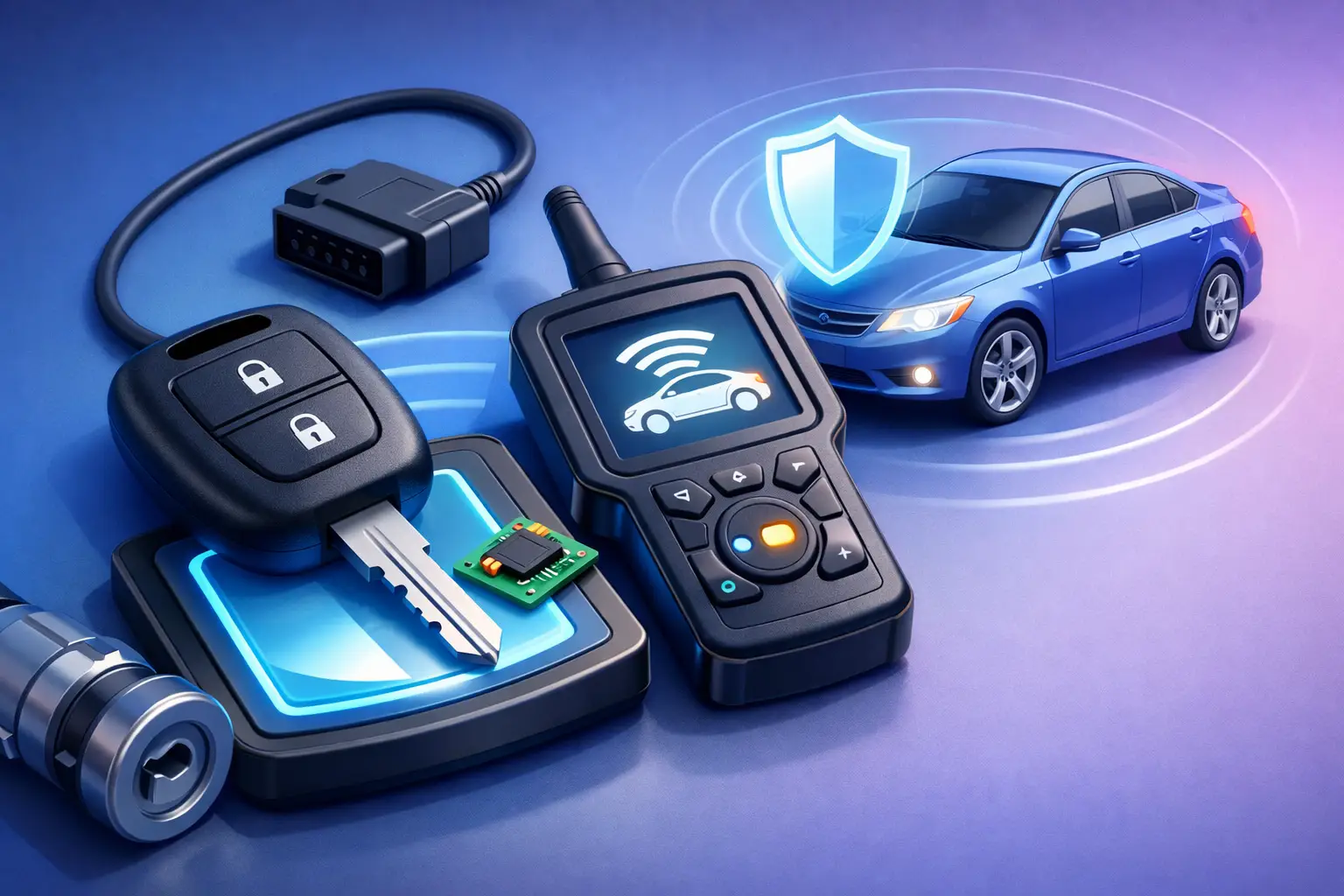
A newly cut key that turns in the ignition but will not start the engine is usually not a cutting problem. It is an immobilizer problem. Knowing how to program a transponder key can help you understand what your vehicle needs, avoid buying the wrong replacement, and get back on the road without wasting time.
The short answer is that the vehicle must recognize the electronic chip inside the key. Some older vehicles let an owner add a key through an onboard procedure. Many modern vehicles, including newer Toyota and Lexus models, require professional diagnostic equipment, security authorization, or both. The correct path depends on your year, make, model, and whether you still have a working key.
What a Transponder Key Actually Does
A transponder key contains a small chip that communicates with the vehicle's immobilizer. When you turn the key or place a smart key in the required position, the vehicle checks the chip's identification. If the code matches one stored in the vehicle, the engine is allowed to start.
This is different from the remote buttons. A key can lock and unlock the doors yet still fail to start the vehicle if its transponder chip has not been programmed. The reverse can also happen: the engine starts, but the remote functions do not work because the fob portion needs separate setup or has a battery issue.
That distinction matters when ordering a replacement. The key must be compatible in more ways than appearance. The blade style, chip type, frequency, remote configuration, and vehicle-specific programming method all need to match.
Before You Try to Program a Transponder Key
Start by confirming the basics. Check the exact vehicle year, make, model, trim, and ignition type. A 2014 model may use a completely different key system than the same vehicle sold a year later. If available, have the VIN ready as well. It helps a qualified key technician confirm the correct part and programming process.
You also need to know your starting situation. Adding a spare while you still have two working keys is generally the easiest and least expensive scenario. Replacing a damaged key while one original still starts the car may be straightforward. Losing every working key is more involved because the vehicle may need an immobilizer reset, new keys registered, and sometimes a security procedure before it will accept a new key.
Do not assume a low-cost aftermarket key is automatically a bargain. Some can work well when they are the correct quality and configuration. Others have incompatible chips, weak circuit boards, incorrect frequencies, or no programmable chip at all. A key that looks right is not necessarily a key your vehicle can recognize.
When DIY Programming May Work
Some older vehicles offer an onboard key registration routine. Depending on the manufacturer, it may involve using an existing recognized key, cycling the ignition in a particular sequence, and introducing the new key within a set time. The owner's manual is the right first place to check for a manufacturer-approved procedure.
DIY programming is most realistic when all of the following are true: you have at least one working programmed key, the vehicle specifically supports onboard programming, and you have purchased the exact compatible transponder key. Even then, follow the instructions precisely. A weak vehicle battery, a dead key-fob battery, a worn ignition cylinder, or a skipped timing step can cause the process to fail.
Avoid random online instructions that promise one universal sequence for every car. There is no universal process. Procedures vary by manufacturer, model year, immobilizer generation, and whether the vehicle uses a traditional ignition key, proximity smart key, or push-button start system.
When Professional Programming Is the Better Move
Professional programming is the practical choice for most late-model vehicles. A mobile automotive locksmith can use dedicated diagnostic tools to communicate with the immobilizer, identify the supported key type, and register the key correctly without guesswork.
You should call for professional help if you have no working keys, the security or key warning light stays on, your vehicle uses a smart key, the key was damaged by water or impact, or a DIY attempt did not work. These situations can involve encrypted key data, immobilizer synchronization, or module-level diagnostics. Trying multiple incompatible keys can create more delay and may leave you unsure whether the issue is the key, the vehicle battery, the ignition antenna, or the immobilizer itself.
For Toyota and Lexus owners, the details are especially vehicle-specific. Some models use conventional chip keys, while others use proximity smart keys with more advanced electronic security. An experienced specialist can determine whether the key needs cutting, chip programming, remote setup, smart-key registration, or a combination of services.
The Professional Process, Step by Step
A legitimate automotive key service begins by verifying vehicle ownership. Have your driver's license and registration, title, insurance card, or other acceptable proof ready. This protects your vehicle and helps the technician proceed without unnecessary delays.
Next, the technician identifies the vehicle's key system and confirms the correct replacement key. If your key has a metal blade, it may need to be cut before it can operate the door and ignition. For smart keys, the emergency insert may also need cutting even though the vehicle starts with a push button.
The programming equipment is then connected to the vehicle and used to register the new key with the immobilizer. For an all-keys-lost situation, the process may involve clearing lost keys from the vehicle's memory and adding new authorized keys. Removing lost keys is a smart security step because a missing key should not remain capable of starting your car.
Finally, every function should be tested before the job is complete. That includes starting the vehicle, locking and unlocking the doors, panic operation if equipped, trunk access, remote start if applicable, and the emergency key blade. Testing at the vehicle prevents the frustrating surprise of finding a problem after the technician has left.
Common Problems That Look Like Programming Failures
A transponder issue is only one possible cause of a no-start condition. A drained vehicle battery can prevent the immobilizer system from communicating normally. A weak fob battery can stop a push-button-start vehicle from detecting the smart key. On some models, holding the fob against the start button or using the designated backup location may help temporarily, but check your owner's manual for the correct method.
A damaged key is another common issue. Cracked shells can let moisture reach the chip or circuit board. Buttons may wear out while the transponder still works, or the chip may fail even though the blade looks perfect. Replacing only the shell can be an affordable fix when the electronics are intact, but it will not repair a failed chip.
If the key starts the car inconsistently, do not wait until it fails completely. Intermittent operation can point to a worn key, a failing fob battery, ignition antenna trouble, or an immobilizer-related fault. Getting it checked while you still have a working key is usually faster and more affordable than dealing with an all-keys-lost emergency.
Protect Your New Key From the Next Emergency
Once your replacement works, make a spare right away. Keep it somewhere secure away from the vehicle, not hidden inside it. For households with multiple drivers, each driver should have a tested key. Rideshare drivers, commuters, and families who depend on one vehicle have the most to lose from waiting until the only key disappears.
Also keep the key dry, avoid heavy keychains on traditional ignition keys, and replace the fob battery before it becomes unreliable. If you buy a shell or replacement fob online, verify compatibility before moving electronics or scheduling programming.
A transponder key is a security device, not just a piece of metal. If your key is lost, damaged, or refusing to start the car, Smartkeys can help identify the right solution and bring the programming service to your vehicle. The fastest fix is usually the one matched to your exact car and key situation.