






Your smart key worked at the grocery store, then suddenly your vehicle will not unlock in your driveway. That is the kind of problem that turns a normal day into a missed appointment, a late pickup, or a stranded work shift. Smart key repair can often restore a damaged or unreliable key without the dealership delay, but the right answer depends on what failed: the battery, the shell, the buttons, the emergency key, or the electronic system inside.
Modern vehicle keys do far more than open doors. A wireless smart key communicates with your vehicle's security system, and a transponder key must be recognized by the immobilizer before the engine can start. When one part stops working, the symptoms can look similar even though the repair is completely different.
What Smart Key Repair Can Actually Fix
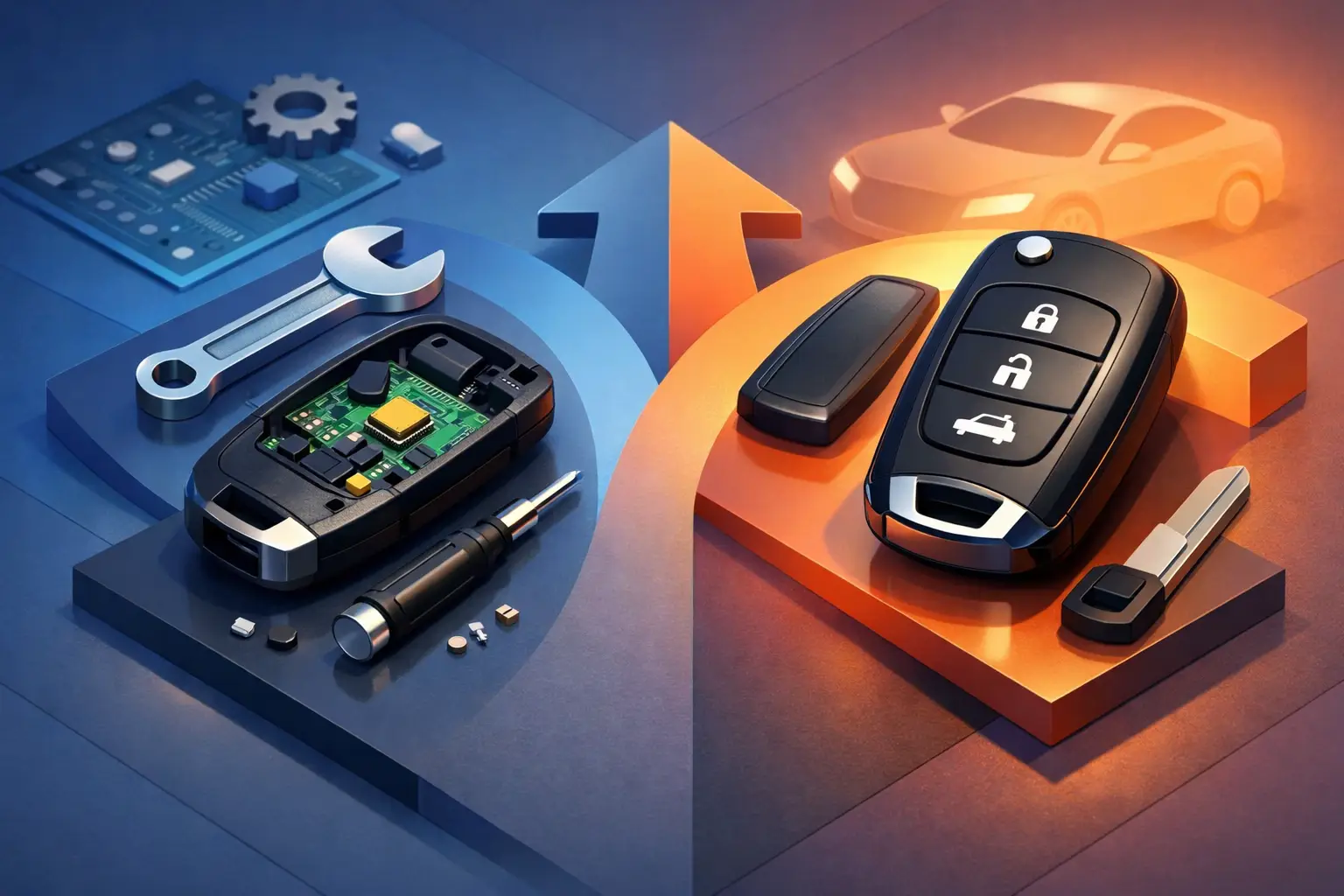
A smart key is a compact electronic device, not just a piece of plastic with buttons. It contains a circuit board, battery contacts, radio components, button switches, and, depending on the vehicle, a transponder chip or proximity system. Damage to any one of these parts can make the key feel dead, work only sometimes, or unlock the car but fail to start it.
The simplest issue is a weak battery. If your key must be held close to the door handle, only works from a short distance, or works intermittently, a fresh battery may be all it needs. Battery replacement is inexpensive, but it should be done carefully. A battery installed backward, loose battery contacts, or a damaged cover can create the same symptoms as a bad battery.
A worn key shell is another common problem. The electronics may be fine while the plastic housing is cracked, the buttons have fallen out, or the emergency key blade no longer stays secure. Replacing the shell can protect the circuit board and make the key usable again. This is often a practical option when the original board still communicates correctly with the vehicle.
Button failure is different. Repeated use can wear down the small switches on the circuit board, especially the unlock, lock, trunk, and panic buttons. If one button no longer responds but the vehicle still starts, the key may be repairable at the board level. If multiple buttons have failed after water exposure or a hard impact, replacement may be the more dependable choice.
Signs Your Key Needs Attention Now
Do not wait for a key to fail completely if you are already seeing warning signs. An intermittent key is not merely annoying. It can leave you locked out or unable to start the vehicle when you are away from home.
Watch for a shrinking operating range, buttons that need repeated presses, a key that only works when held in a certain position, or a vehicle display that says the key is not detected. Physical clues matter too: a split shell, missing button pad, loose key blade, or corrosion around the battery compartment all deserve attention.
Water is especially risky. A key dropped in a puddle, washed in a pocket, or exposed to a drink may continue working briefly before corrosion affects the circuit board. Remove the battery if possible and avoid repeatedly pressing buttons. Heat can make the damage worse, so do not put the key in a microwave, oven, or direct high heat. A professional inspection is safer than hoping it dries out and stays reliable.
Repair or Replacement: The Decision Comes Down to the Failure
Repair makes sense when the original smart key's electronic identity is still intact. That includes a dead battery, a broken shell, worn buttons, damaged battery terminals, or an emergency blade that needs cutting or replacement. Keeping the original circuit board can save time and cost because the vehicle may already recognize it.
Replacement is usually the better route when the circuit board is badly corroded, crushed, missing, or no longer sends a usable signal. It is also necessary when the key has been lost. A replacement smart key or remote fob typically needs to be matched to your vehicle, programmed into the immobilizer or smart access system, and cut if it includes an emergency key blade.
There is a trade-off with inexpensive online keys. A replacement fob may look identical to your original, yet the wrong frequency, chip type, board number, or button configuration can prevent it from working. Some aftermarket options are a good fit, while others are not. Matching the key correctly to the vehicle's make, model, year, and existing key system matters more than choosing the lowest sticker price.
For Lexus and Toyota owners, the details are particularly important. Many models use sophisticated immobilizer and proximity key systems, and some require specialized programming procedures. A key that unlocks the doors is not automatically a key that will start the vehicle. The transponder or smart key registration must be completed correctly.
Why a Car Can Start but the Remote Does Not Work
This situation confuses many drivers because it feels like the key is both working and not working. In many vehicles, the remote locking functions and the starting authorization rely on separate parts of the key's electronics. A damaged remote circuit can stop the buttons from operating while the transponder still allows the engine to start.
The reverse can happen too. Your buttons may lock and unlock the doors, but the vehicle may refuse to start because it cannot detect or authenticate the transponder or proximity chip. That is not a problem solved by changing a battery alone. It calls for the right diagnostic equipment and programming knowledge.
A loose battery connection can also produce inconsistent behavior. You might unlock the doors successfully, then find that the key does nothing a few minutes later. Before assuming the entire key is bad, the battery, contacts, case fit, and button response should be checked.
Smart Key Repair Is More Than Cutting a New Blade
A mechanical key can often be copied from the original. A modern smart key may require cutting, electronic programming, remote synchronization, and security registration. When all keys are lost, the job can involve accessing the vehicle's immobilizer system, generating the correct key data, and removing lost keys from the system when appropriate for security.
That is why a quick hardware-store copy is not always an answer for a modern vehicle. The blade may turn in the door, but without the correct electronic programming, it will not start the car. On the other hand, not every issue requires a full replacement key. A technician who understands both the physical key and the electronic side can identify the least disruptive solution.
Mobile service is especially useful when the car cannot be started or the remaining key is unreliable. Instead of arranging a tow or waiting at a dealership, service can come to the vehicle's location with the equipment needed to diagnose the key, cut an emergency blade, program a replacement, or help with an all-keys-lost situation.
What to Do Before You Call for Help
A few details can make the repair process faster. Have your vehicle's make, model, and year ready, along with your location and a clear description of what the key does or does not do. If the key has been dropped, washed, cracked, or previously repaired, mention that too.
If you still have a working spare key, keep it safe and bring it to the appointment if requested. A working key can help verify the vehicle system and may make duplication easier. Do not try to force open a smart key case with a screwdriver unless you know where the battery compartment and circuit board sit. Broken clips, torn button pads, and damaged boards can turn a simple shell job into a replacement.
You should also be prepared to show proof of vehicle ownership and identification. Automotive key programming affects vehicle security, so legitimate service requires confirming that the vehicle belongs to you or that you are authorized to access it.
Keep the Next Key Problem From Becoming an Emergency
Once your key is repaired or replaced, make a duplicate before you need one. A spare is cheaper and less stressful to create while one working key is still available. Store it somewhere secure, not inside the vehicle, and replace the battery at the first sign of reduced range.
Use a protective case if your key regularly shares a pocket or bag with coins, tools, or heavy items. Avoid leaving it in high heat, and keep water exposure to a minimum. Small habits help, but electronics can still fail without warning. That is why Smartkeys treats the key as both a convenience device and a critical part of your vehicle's security system.
If your key is acting unpredictable today, address it while you can still drive. A quick diagnosis now can be the difference between a straightforward repair and a no-start emergency tomorrow.