






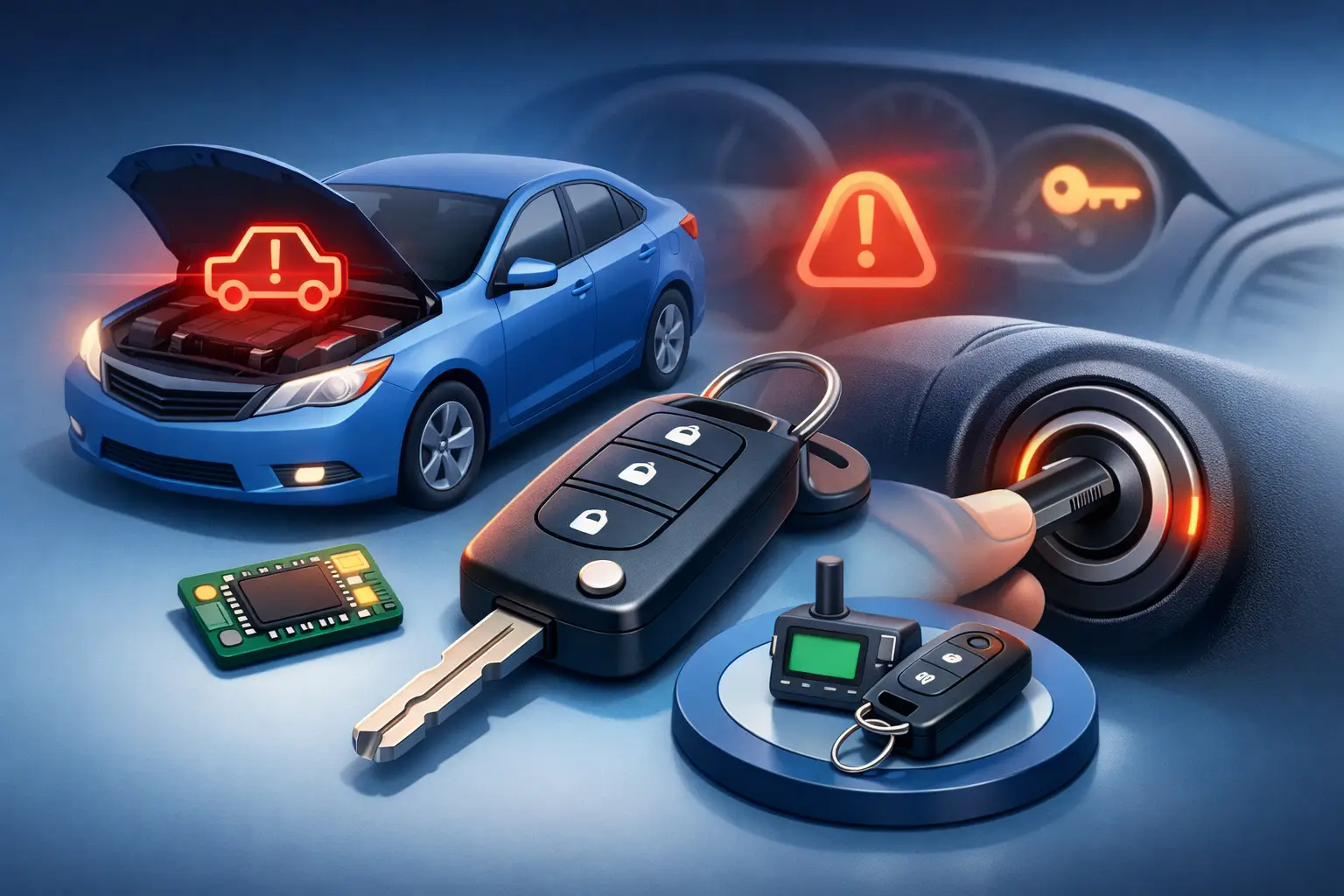
A key that turns in the ignition but leaves your car dead can feel like a major mechanical failure. Often, the engine is fine. The issue is that the vehicle does not recognize the electronic chip inside the key. Immobilizer key replacement restores that recognition, so your vehicle can authorize the start and get you back on the road.
Modern keys do more than open doors. Whether you have a traditional metal key with a transponder chip, a remote-head key, or a push-button smart key, it contains information your vehicle expects to see. If that information is missing, damaged, incorrectly programmed, or no longer accepted by the car, the immobilizer can prevent the engine from starting.
When Immobilizer Key Replacement Is Needed
An immobilizer is an anti-theft system built into most modern vehicles. When you insert the key or bring a smart key into the cabin, the vehicle reads its electronic credential. A match allows the engine to start. No match means the car may crank without starting, show a security light, or display a message that the key is not detected.
A replacement may be needed after a key is lost, stolen, snapped, water-damaged, or run over. It can also be the right answer when a key starts working only sometimes. Intermittent problems are frustrating because the remote buttons may still work while the chip or smart-key electronics fail to communicate reliably with the vehicle.
Battery issues can look similar, especially with push-button start vehicles. A weak key fob battery may cause a “key not detected” warning, but changing the battery does not fix a broken transponder, corrupted programming, or a lost key. Before paying for a replacement, a qualified automotive locksmith should identify whether the problem is the key, the vehicle battery, the key reader, or another part of the starting system.
A New Key Must Be Cut and Programmed
The physical blade is only one part of the job. A key can be cut perfectly and still fail to start the vehicle if it has not been programmed to the immobilizer. With smart keys, there may not even be an everyday metal blade to cut, but the electronic registration is still essential.
The process generally starts by confirming the make, model, year, and vehicle identification details. The technician then selects a compatible key or remote, cuts the emergency key if required, and programs the new key to communicate with the vehicle. Finally, they test every function that applies: starting the vehicle, locking and unlocking doors, remote buttons, proximity detection, trunk access, and panic function.
The exact process depends on the vehicle. Some older transponder systems can be programmed relatively quickly when a working key is available. Late-model vehicles may use encrypted or crypto electronic keys that require specialized diagnostic tools, security access, and the right technical procedure. Toyota and Lexus keys, for example, can vary significantly by year, trim, and smart-key system.
That is why a generic key from a retail shelf is not always a bargain. It may be the wrong frequency, use an incompatible chip, lack the proper board, or require programming equipment that is not available to the average driver. Buying the wrong key can turn a simple replacement into two purchases and more lost time.
Lost Every Key? The Situation Is Still Fixable
All-keys-lost service is different from copying a spare. Without a working key, the vehicle cannot provide the usual starting point for duplication. The locksmith may need to retrieve key information, access the vehicle’s immobilizer system, erase old keys, and register new ones.
This is also the safest option after theft. If someone has your lost or stolen key, simply adding a new key may not be enough. Removing the missing key from the vehicle’s authorized key list can help prevent it from being used to start your car later. The right approach depends on the vehicle and the circumstances, but security should be part of the conversation, not an afterthought.
Mobile service makes a real difference when the car cannot be driven. Instead of arranging a tow to a dealership and waiting for parts or an appointment, a properly equipped automotive locksmith can come to the vehicle’s location. For a commuter late for work, a parent stranded at school pickup, or a rideshare driver losing income by the hour, that convenience matters.
What Affects Immobilizer Key Replacement Cost
There is no honest one-price answer because the vehicle’s technology drives the work involved. A basic transponder key typically costs less than a late-model proximity smart key. An all-keys-lost job usually requires more labor and security programming than making a duplicate from an existing working key.
The main factors are the vehicle’s make, model, and year; the type of key it uses; whether a working key is available; and whether the job requires mobile service, emergency cutting, or immobilizer reset procedures. Luxury models and newer encrypted systems can require more advanced equipment. That does not automatically mean the dealership is the only option, but it does mean the technician needs experience with that platform.
Ask for pricing based on your specific vehicle instead of relying on a broad online estimate. Have the year, make, model, trim if known, and your location ready. A clear quote should explain whether it includes the key, cutting, programming, travel, and testing. Transparent information upfront helps prevent surprises after the work is complete.
Dealership or Automotive Locksmith?
A dealership can replace many factory keys, but it may require towing the vehicle, scheduling an appointment, presenting ownership documentation, and waiting for the key to arrive. For some drivers, especially when the car is already at the dealership for other work, that route makes sense.
An automotive locksmith is often the faster option when the vehicle is stranded at home, work, or a parking lot. The best specialists carry key inventory, electronic programming tools, and cutting equipment to complete the job where the vehicle sits. They can also address common real-world situations that do not fit neatly into an appointment calendar, including lost keys at night, damaged fobs, and no-working-key emergencies.
The trade-off is capability. Not every locksmith handles immobilizer systems, and not every provider supports every make and model. Choose a technician who works specifically with modern automotive keys, asks the right questions about your vehicle, and verifies ownership before programming. Smartkeys focuses on these electronic key systems, including advanced Toyota and Lexus applications, rather than treating vehicle keys as a basic cutting job.
Avoid These Replacement-Key Mistakes
Do not wait until the only key fails. If your key works inconsistently, the buttons are damaged, the shell is separating, or you have only one remaining key, making a spare now is usually less stressful and less expensive than dealing with an all-keys-lost situation later.
Avoid using a used smart key or fob unless an experienced technician confirms it can be properly prepared for your vehicle. Many keys are locked to the original vehicle or need specialized renewal procedures. A key that looks identical is not necessarily electronically compatible.
Also, keep water exposure in perspective. A fob that went through the wash may work briefly and then fail as corrosion spreads. Remove the battery when safe to do so and get it inspected promptly. Drying it out does not guarantee the electronics are healthy.
Finally, protect the emergency key blade. Even on a push-button vehicle, that small mechanical key can be the difference between accessing your car and being locked out when the fob battery dies. It should be cut correctly and stored with the fob or in a secure backup location.
A replacement key should leave you with more than a car that starts once. It should be tested, secure, and dependable enough for the next early morning, long drive, school run, or unexpected stop. If your key is lost or acting up, getting the right electronic solution now is the easiest way to keep a small problem from becoming a stranded day.