






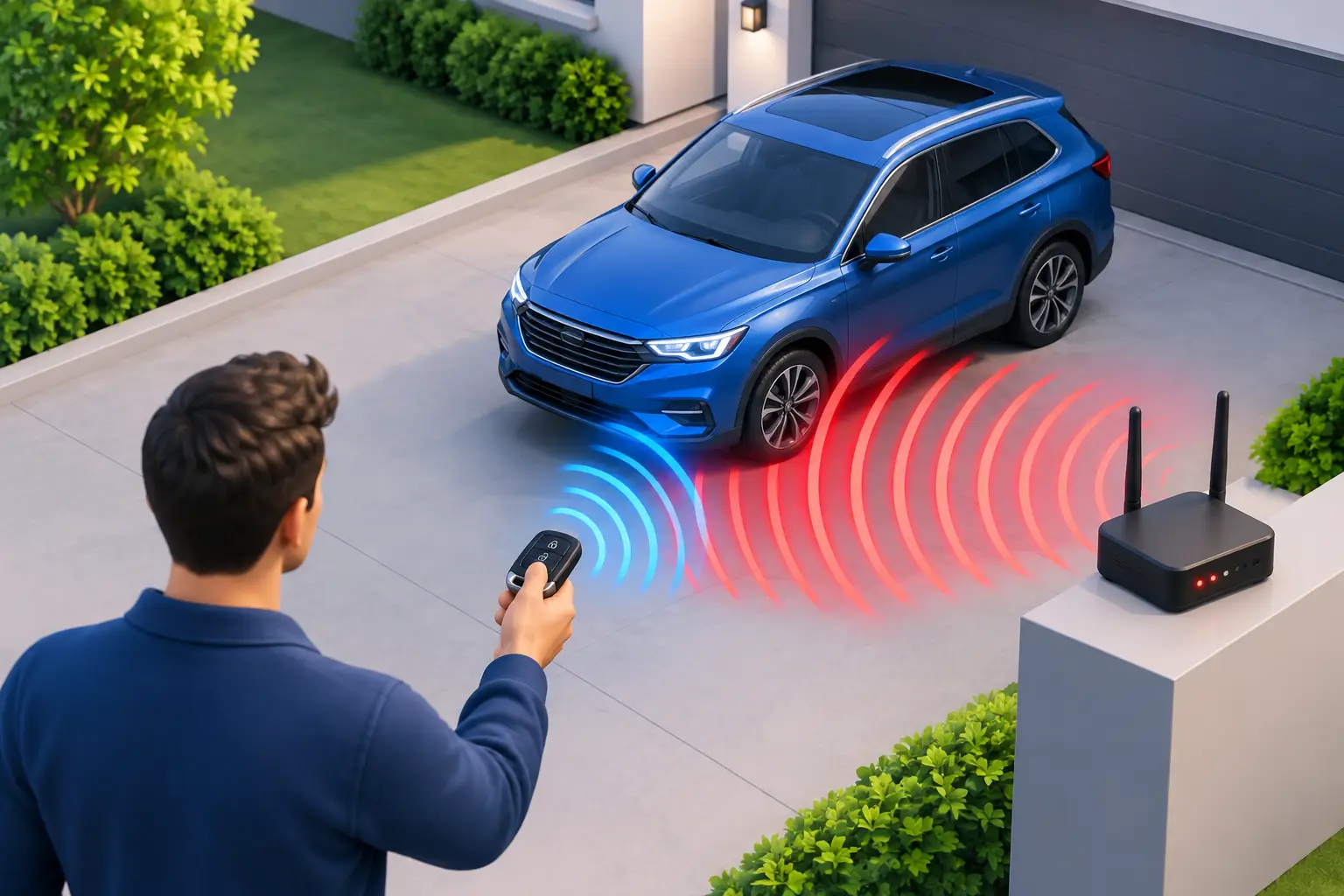
A key fob that works perfectly at home but will not unlock your car in a parking lot is not always a dead key. Remote signal interference can interrupt the short wireless conversation between your remote and vehicle, making a working fob look completely unresponsive. The good news is that many cases are temporary. The important part is knowing when to move locations, when to use your mechanical key, and when the problem points to a fob or vehicle issue that needs service.
What Remote Signal Interference Does to a Key Fob
Modern remotes, smart keys, and push-button start systems communicate with the vehicle using low-power radio signals. When you press Lock or Unlock, the fob sends an encrypted command. A proximity smart key also communicates with the car when it is near a door handle or inside the cabin.
That signal is designed for a short distance. It does not need much outside noise to become unreliable. Strong nearby radio activity, certain electronic equipment, metal structures, or even a crowded area full of wireless devices can prevent the vehicle from hearing the fob clearly.
The symptom can be confusing. You may press the button several times and get no response. You may be able to unlock the vehicle but not start it with push button ignition. Or the remote may work only when held very close to the door handle or start button. Those details matter because they help separate interference from a weak battery, damaged remote, or programming problem.
Common Places Where Signal Problems Show Up
Interference is usually location-specific. If your remote fails in one spot and works again after you drive or walk a short distance away, outside radio noise is a likely cause.
Parking garages are a common example. Concrete, steel reinforcement, gate systems, security equipment, and many vehicles packed close together can affect signal performance. Airports, hospitals, industrial areas, large apartment buildings, stadium lots, and locations near radio or communication equipment can create similar conditions.
A metal object can also reduce range without being true radio interference. Keeping the fob pressed against a phone, laptop, power bank, metal key organizer, or a bag filled with electronics may weaken the signal. The fob may still work, but only from a much shorter distance.
There is another situation worth taking seriously: a remote that suddenly stops responding near your vehicle while other electronics act unusually. Deliberate signal jamming is uncommon, but it can happen. Do not leave valuables in the car simply because you pressed Lock and heard no confirmation. Check the door manually before walking away. If something feels suspicious, move to a safer, more visible location and contact local security or law enforcement as appropriate.
Quick Checks Before You Assume the Key Is Bad
Start with the simplest test: move the fob and the vehicle. Walk 50 to 100 feet away if it is safe to do so, then try again. If you are parked inside a garage, exit the structure if possible. A key that immediately begins working in a different location is more likely dealing with environmental interference than a permanent failure.
Next, try your spare key if you have one. If both remotes fail only in one location, the environment is the likely issue. If one works and one does not, the nonworking fob may have a weak battery, internal damage, worn buttons, or a programming concern.
For a push-button start vehicle, use the emergency start procedure in your owner's manual. Many Toyota and Lexus models can detect the smart key when it is held directly against or very close to the Start button. This can help when the fob battery is weak or the normal detection range is reduced. The exact procedure varies by model, so do not force anything or rely on a generic method for every vehicle.
If the remote will not unlock the doors, use the mechanical emergency key stored inside many smart fobs. This key is there for situations just like this. On some vehicles, the keyhole is visible on the driver's door; on others, it sits behind a small cover near the handle. Using it can get you into the vehicle while you determine whether the electronic issue is temporary.
Interference or a Failing Fob? Look for the Pattern
A dead or weak fob battery usually causes gradually reduced range. You may need to stand closer to the vehicle for several days or weeks before the remote stops working consistently. It may work at every location, just poorly.
Interference is more likely when the problem appears suddenly in one area and disappears elsewhere. It can affect both your main key and spare key at the same time. The vehicle itself may be fine once it is moved.
A damaged fob can be less predictable. Water exposure, a hard drop, cracked solder connections, broken button contacts, and worn key shells can all cause intermittent operation. If the remote only works when squeezed, tapped, or held at a certain angle, it is not an interference issue. It needs repair or replacement.
A vehicle-side problem has its own pattern. If every known working key fails everywhere, the issue may involve the vehicle battery, smart key antenna, door receiver, immobilizer system, or related electronics. That requires proper diagnosis, especially on vehicles with encrypted transponder and smart key systems. Replacing the fob alone may not solve it.
Why Repeated Button Presses Can Make Things Worse
When a remote does not respond, most drivers naturally press the button over and over. That rarely fixes interference. It can drain a weak fob battery faster, and it distracts from the more useful test: changing location and checking whether the vehicle is actually locked.
Avoid taking apart the remote in a parking lot unless you are certain the battery is the issue and have the correct replacement. Smart keys contain small components that can be lost or damaged, and some key shells do not go back together securely once broken. A new battery is inexpensive, but a damaged electronic board or missing emergency key is not a convenient trade.
It is also smart not to store your only working key in a place where it is constantly exposed to moisture, extreme heat, or pressure. A fob that has been sitting in a cup holder, gym bag, or overstuffed pocket can develop a separate problem that happens to appear at the same time as an interference event.
When Professional Key Service Makes Sense
Call for automotive key help when the problem follows you to multiple locations, the key will not start the vehicle, your spare fob also fails, or you have lost the only working key. An experienced automotive locksmith can test the remote, inspect the shell and battery contacts, verify programming, and determine whether the vehicle is recognizing the key's transponder or smart key signal.
This matters most with newer Toyota and Lexus systems. These keys are not just remote controls. They are part of the vehicle's anti-theft system, with encrypted electronic communication between the key and immobilizer. A replacement remote needs the correct frequency, chip type, key blade when applicable, and programming for that exact vehicle. A look-alike fob may fit the shell but still fail to lock, unlock, or start the car.
Mobile service can be especially helpful when the vehicle cannot be moved. Instead of arranging a tow or waiting for a dealership appointment, a qualified technician can come to the vehicle, create and program a replacement key, repair a damaged fob when possible, or handle an all-keys-lost situation. Smartkeys focuses on these modern electronic key systems, including remote fobs, smart keys, transponder keys, and emergency key solutions.
Prevent the Next Bad Surprise
Keep a tested spare key in a safe place away from the vehicle. Test it occasionally, not only after your primary key fails. Replace the fob battery when range begins to shrink, and use a protective shell if your remote is cracked or the buttons are worn.
Most importantly, pay attention to where the failure happens. A key that stops working once may be dealing with remote signal interference. A key that keeps failing everywhere is asking for diagnosis before it leaves you stranded. Your vehicle should not have to wait for access, and neither should you.