





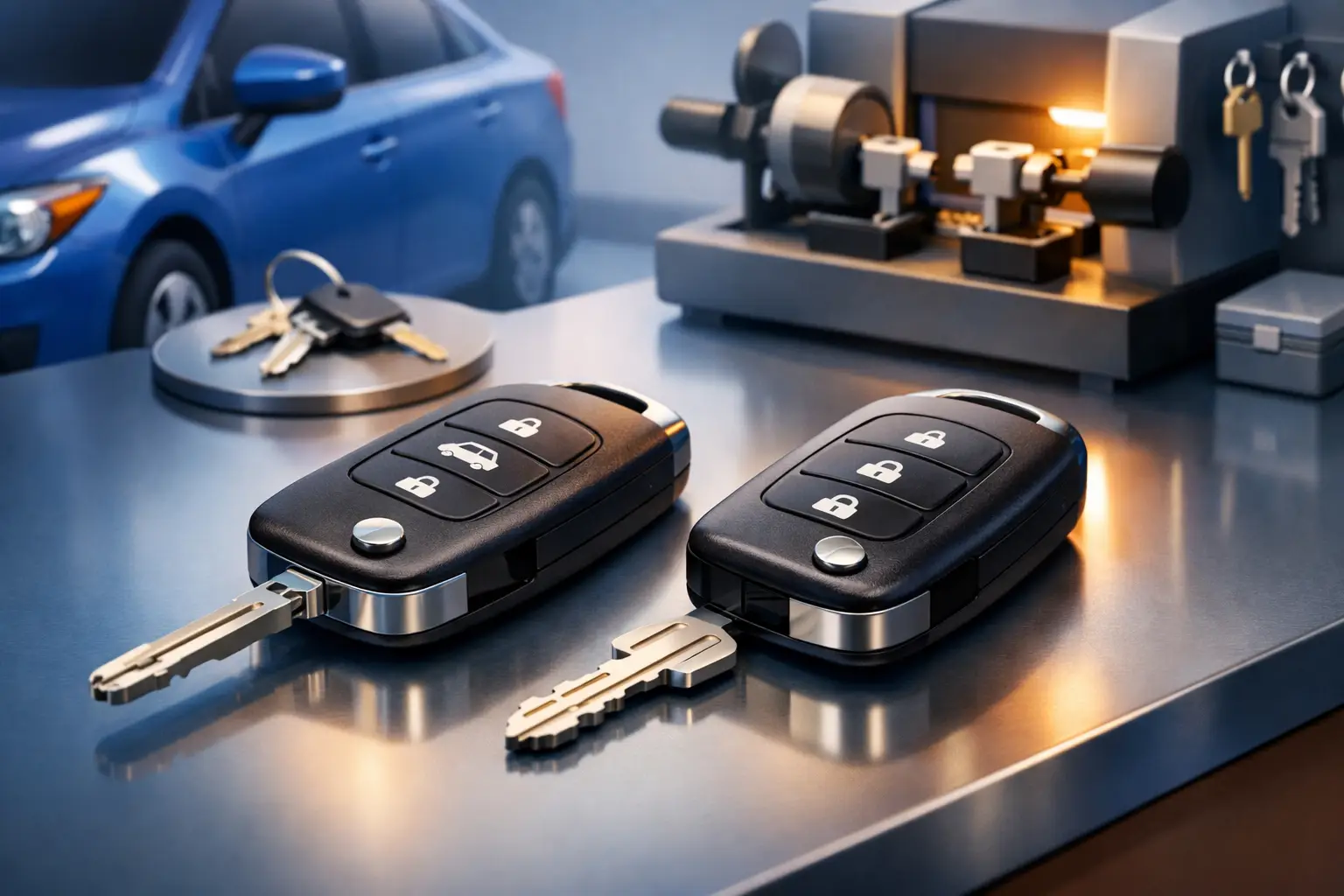
The second key usually becomes urgent at the worst possible moment: your primary fob is in the laundry, the battery dies at work, or a family member needs the car while you are away. A car key copy is one of the simplest ways to avoid a lockout, towing bill, missed shift, or last-minute dealership visit. For modern vehicles, though, copying a key involves more than cutting a matching piece of metal.
Most newer cars use an immobilizer, transponder chip, remote functions, or proximity smart-key technology. The duplicate must be cut correctly, programmed to communicate with the vehicle, and tested before it can be trusted. That is why the right time to get a spare is while you still have one working key in hand.
A Car Key Copy Is More Than a Key Blank
A traditional mechanical key can often be duplicated by matching its cuts to the original. Many drivers still have this type of emergency key tucked inside a smart fob. But the metal blade only opens the door or turns the ignition. If your vehicle has an immobilizer system, it will not start unless the electronic chip inside the key is recognized.
That distinction matters. A hardware-store copy may look right and may even unlock the door, but it can fail to start the vehicle if it has no programmed transponder. A remote fob may also need its lock, unlock, panic, trunk, and remote-start functions paired to the vehicle. With push-button-start cars, the smart key must be registered so the vehicle detects it inside the cabin.
The exact process depends on the make, model, year, and key system. Toyota and Lexus keys, for example, often use encrypted transponder or smart-key technology. A proper duplicate requires compatible equipment, the correct key or fob, and programming procedures designed for that vehicle.
When You Should Get a Car Key Copy
The best time to copy a car key is before you need one. If you have only one working key, you are one accident, dead battery, misplaced bag, or damaged fob away from a more complicated all-keys-lost situation. Creating a duplicate while one key still works is usually faster and less expensive than starting over with no recognized key available.
A spare makes particular sense for households that share a vehicle, drivers who commute long distances, rideshare drivers, and parents whose schedules depend on getting everyone where they need to go. It also helps if your existing key is showing warning signs: a cracked shell, worn buttons, intermittent remote response, a loose emergency blade, or a fob that only works after several attempts.
There is also a practical security reason to act early. When a key is lost and you are not sure where it went, the goal is not simply getting another one. The vehicle may need to be rekeyed or have missing keys removed from its memory. That is a different service from making a duplicate of a key you still control.
What a Proper Duplicate Includes
A dependable duplicate starts with identifying the key type, not ordering a look-alike fob based on a photo. The outside shape is only one part of compatibility. The internal chip, frequency, button layout, circuit board, blade style, and programming method all need to match the vehicle.
For a standard remote-head key, the service may include cutting the blade, installing the correct transponder, and programming remote functions. For a smart key, it may involve registering the fob to the vehicle and cutting the hidden emergency key. Some vehicles require security credentials or diagnostic equipment to complete the process correctly.
After programming, the key should be tested for every function it is supposed to perform. That means starting the vehicle, locking and unlocking the doors, checking the trunk or liftgate button when applicable, and confirming proximity entry and push-button start on smart-key systems. A quick test at the vehicle prevents the unpleasant surprise of finding out your spare is only half-functional when the original is gone.
The Key, the Fob, and the Shell Are Not the Same Thing
Drivers often use these terms interchangeably, but they solve different problems. The key is the physical blade or electronic credential that authorizes the vehicle to start. The fob is the remote device that may contain the chip and controls. The shell is the outer case that holds the buttons, battery, and electronics.
If your fob still starts the car but the plastic case is cracked or the buttons have worn through, a replacement shell may be enough. It is often a practical repair option because the original electronics stay in place. If the circuit board has water damage, the chip has failed, or the fob has disappeared, a complete replacement and programming may be needed instead.
Mobile Locksmith Service or the Dealership?
Both a qualified automotive locksmith and a dealership can be valid options, but the better choice depends on the situation. A dealership may be appropriate for certain warranty issues, highly restricted keys, or a vehicle that needs manufacturer-specific diagnosis beyond the key system. It can also involve scheduling, arranging transportation, and bringing the vehicle in.
A mobile automotive locksmith is often the more direct option when the car cannot move, when you need help at home or work, or when every key has been lost. The locksmith comes to the vehicle with cutting and programming equipment, which can eliminate the need for a tow. For many common transponder keys, remote fobs, and smart keys, this can be a faster and more affordable route.
The important part is choosing a provider equipped for modern vehicle security, not just basic key cutting. Ask whether they can program your specific year and model, cut the emergency blade if needed, test all functions, and handle all-keys-lost service if your only working key fails. Smartkeys focuses on this kind of electronic automotive key work, including advanced Toyota and Lexus systems.
Have the Right Details Ready
Getting a duplicate goes more smoothly when the vehicle information is accurate. The year, make, model, and trim help identify the correct key system. Your vehicle identification number may also be needed to confirm key compatibility and ownership. If you have the original key, bring it or have it available for inspection.
Be prepared to show a valid photo ID and proof that you own or are authorized to use the vehicle. This protects you as much as it protects the service provider. Legitimate key programming should not be treated like buying a generic accessory off a shelf.
If you are ordering a fob or key online, do not assume that “fits” means “works.” Verify the part number, frequency, button configuration, and whether the item is new, refurbished, or an empty shell. Some keys can be programmed only with professional tools, while others may support a limited owner procedure. The correct answer is vehicle-specific.
Avoid the Cheapest-First Mistake
A low-priced blank can become expensive if it is incompatible, cannot be programmed, or fails after a few weeks. The same goes for used fobs that may already be locked to another vehicle or have unknown internal damage. Saving a few dollars upfront is not much help if the spare cannot start the car when you need it.
That does not mean every driver needs the most expensive option. A basic programmed transponder key can be a smart backup for a vehicle that normally uses a costly smart fob. It may not provide remote buttons or proximity entry, but it can still get you into the vehicle and allow you to drive. The right choice depends on whether you want a full-featured duplicate, an emergency key, or a repair for the key you already own.
Keep the spare somewhere secure but separate from the primary key. Leaving both on the same ring defeats the purpose. A trusted family member, a locked home location, or a protected work bag can be a better backup plan than the glove box.
A working spare key is quiet insurance: you hope you never need it, but it can turn a stressful interruption into a short inconvenience. If your only car key is damaged, unreliable, or doing all the work alone, make the copy while access to your vehicle is still easy.