






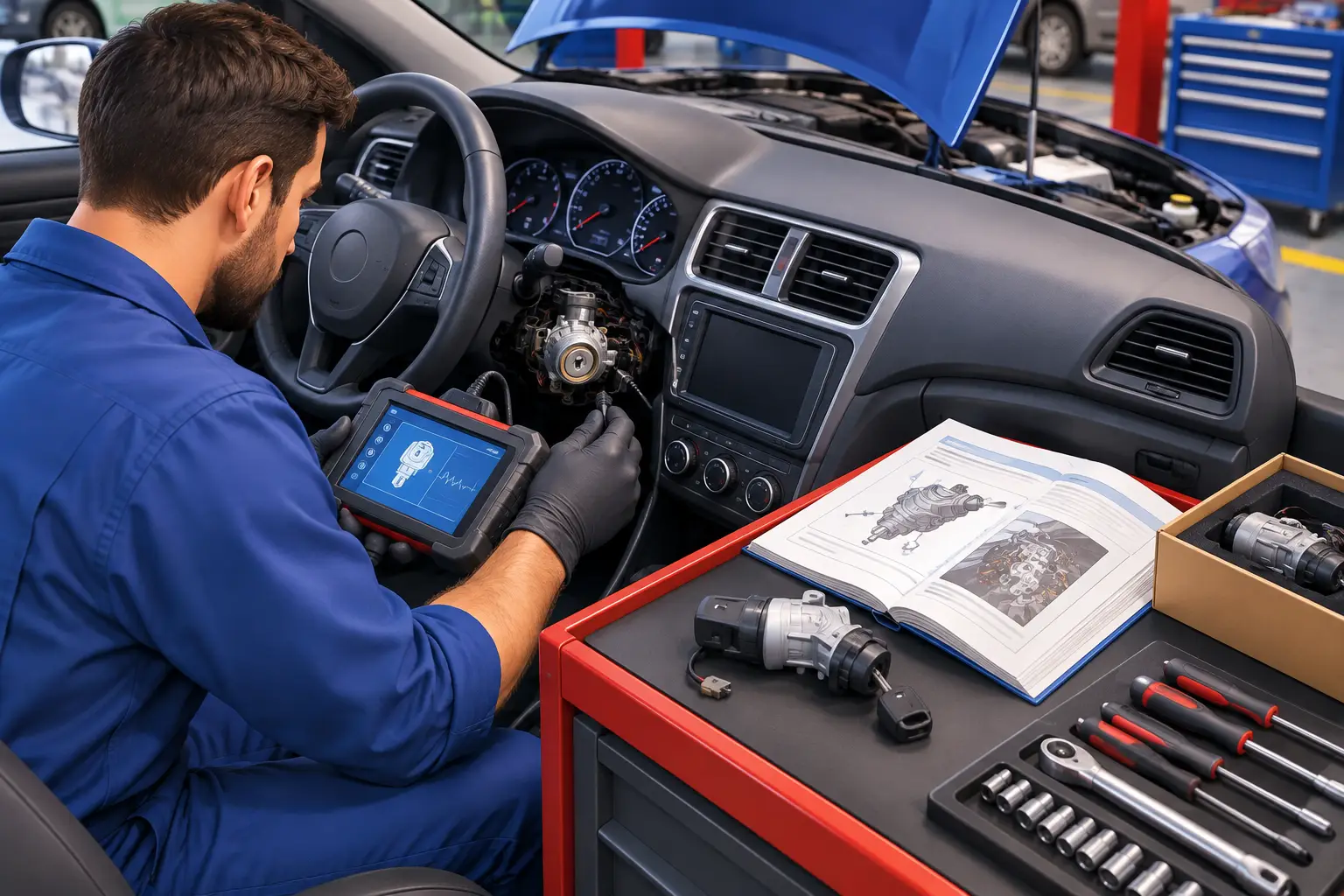
Your car is parked, you have places to be, and the key will not turn. If you are asking, “why is my ignition jammed,” the good news is that the problem is often caused by a safety lockout, a worn key, or a steering wheel under pressure - not necessarily a major vehicle failure. The wrong move is forcing the key. A little extra force can snap the key, damage the ignition cylinder, or turn a quick service call into a larger repair.
Start by noticing exactly what the key is doing. Does it slide into the ignition but refuse to turn? Does it stop before going all the way in? Or does it turn but get stuck in the ACC, ON, or LOCK position? Each symptom points to a different cause.
Why Is My Ignition Jammed? Start With the Steering Wheel
The most common reason a traditional ignition key will not turn is steering wheel lock pressure. This happens when the front wheels are turned as the vehicle is shut off, especially on a hill or against a curb. The steering wheel lock engages, and tension pushes against the ignition mechanism.
Do not yank the wheel or twist the key hard. Keep light, steady turning pressure on the key in the normal start direction while moving the steering wheel gently left and right. One direction will usually have more movement than the other. As the pressure releases, the key should turn.
This is a normal anti-theft function, but it can feel like a complete ignition failure when you are in a hurry. If the wheel will not move at all or the key feels like it could bend, stop. The cylinder may have another issue, and forcing it is not worth the risk.
Check the Shifter and Parking Position
An automatic vehicle is designed to start only in Park or Neutral. If the shifter is not fully seated in Park, the ignition may stay locked or the key may not release when you try to remove it. This can happen even when the gear indicator appears to show Park.
Press the brake, hold it firmly, and move the shifter fully into Park. Then try the key again. If it still will not turn or come out, try Neutral with the brake applied. Never attempt this on an incline without securing the vehicle, and do not leave the vehicle unattended while it is in Neutral.
A worn shift-interlock component, a misadjusted shifter cable, or a weak brake-light switch can create repeat problems. If the ignition works after moving the shifter around, schedule a diagnosis rather than assuming the issue is solved. The next time, the key may not release at all.
A Worn or Damaged Key Can Jam the Cylinder
Your ignition key is more than a piece of metal. Its cuts must line up tiny pins or wafers inside the ignition cylinder. Over years of use, the key blade can wear down, bend slightly, or develop damaged edges. A copy made from an already worn key can make the problem worse.
Look closely at the key under good light. Deep scratches, rounded cuts, cracks near the head, or a visibly bent blade are warning signs. If you have a spare key, try it once. A spare that turns smoothly is strong evidence that the daily key is worn, not that the ignition itself has failed.
Do not use a damaged key repeatedly just because it still works sometimes. A key that catches today can break inside the cylinder tomorrow. For transponder and immobilizer-equipped vehicles, a proper replacement also needs the correct electronic chip and programming, not just a matching metal blade.
What if the key will not go all the way in?
A key that stops before it is fully inserted may be dealing with debris, a damaged key tip, or a problem inside the cylinder. Check that you are using the correct key and inspect the keyway for anything visible. Do not poke inside with a paper clip, another key, or a screwdriver. Those tools can move internal parts out of place or push debris deeper.
A small amount of vehicle-approved dry lock lubricant may help with a dry mechanical cylinder. Avoid soaking the ignition with household oil, grease, or spray products. They can collect dirt, interfere with the lock’s internals, and create a temporary fix that fails again soon.
The Ignition Cylinder May Be Worn Internally
If both your main key and spare key stick, the ignition cylinder itself may be worn. Internal wafers and springs can wear down, bind, or fail to recognize the key cuts consistently. You may notice that the key only turns when you jiggle it, pull it back slightly, or hold it at a certain angle.
That pattern is a service warning, not a technique to rely on. Every attempt to force a failing cylinder increases the chance of a key breaking off inside it. Depending on the vehicle, the repair may involve rebuilding or replacing the ignition cylinder, cutting a correctly matched key, and addressing any electronic key programming required by the immobilizer system.
Older vehicles commonly have a fully mechanical ignition cylinder. Newer vehicles may combine mechanical components with transponder security, steering locks, electronic modules, or smart-key authorization. The repair depends on the exact make, model, year, and ignition setup.
A Dead Key Fob Battery Usually Feels Different
If your vehicle uses a push-button start, a weak smart-key battery can prevent the car from recognizing the fob. That is different from a physical ignition jam. The button may not respond, the vehicle may display a “key not detected” message, or the security light may remain on.
Many smart-key vehicles have an emergency starting method that lets the car read the fob at a designated location, often near the start button. The method varies by vehicle, so use the owner’s manual instructions for your model. Replacing the fob battery may solve the recognition issue, but it will not repair a damaged fob, a depleted vehicle battery, or an immobilizer fault.
Some Lexus and Toyota models also use an emergency mechanical key hidden in the smart fob. That key may unlock the door, but it does not always start the vehicle by itself. The electronic transponder or smart-key system still has to authorize the start.
When the Key Turns but Will Not Come Out
A key stuck in the ignition is usually connected to the shifter, steering lock, or a worn cylinder. First, confirm the vehicle is fully in Park, set the parking brake, and gently move the shifter while holding light pressure toward the key’s LOCK position. Avoid pulling the key hard.
If the key remains trapped, do not disconnect the battery or dismantle steering-column panels unless you know exactly what you are doing. Modern columns can contain sensitive wiring, immobilizer components, and airbag-related parts. A mobile automotive locksmith can assess the ignition and key at the vehicle, which matters when you cannot safely drive it anywhere.
What Not to Do With a Jammed Ignition
There are a few tempting fixes that often create more damage. Do not hit the key with a hammer, twist it with pliers, spray heavy lubricant into the keyway, or keep trying a visibly bent key. Avoid forcing the steering wheel with all your body weight, too.
Also be cautious with online advice that treats every ignition as the same. A simple mechanical lock issue, a smart-key recognition failure, and an electronic steering-lock fault can feel similar from the driver’s seat, but they require different solutions. The right repair starts with identifying the actual failure.
When to Call an Automotive Locksmith
Call for professional help if the key is bending, the ignition is completely locked, the key has broken, both keys fail, or you are dealing with a lost or damaged transponder or smart key. Have your vehicle’s make, model, year, location, and a clear description of the symptom ready. That helps the technician arrive prepared with the right cutting, programming, and diagnostic equipment.
Smartkeys handles modern automotive key and ignition issues with mobile service designed to get drivers moving without the usual dealership delay. For vehicles with advanced immobilizers, crypto electronic keys, or all-keys-lost situations, correct programming is just as important as getting a key to physically turn.
A jammed ignition is frustrating, but it is also your vehicle telling you to stop before a small problem becomes a broken key or damaged column. Use gentle checks first, protect the key and ignition from force, and get qualified help when the problem does not release quickly.