






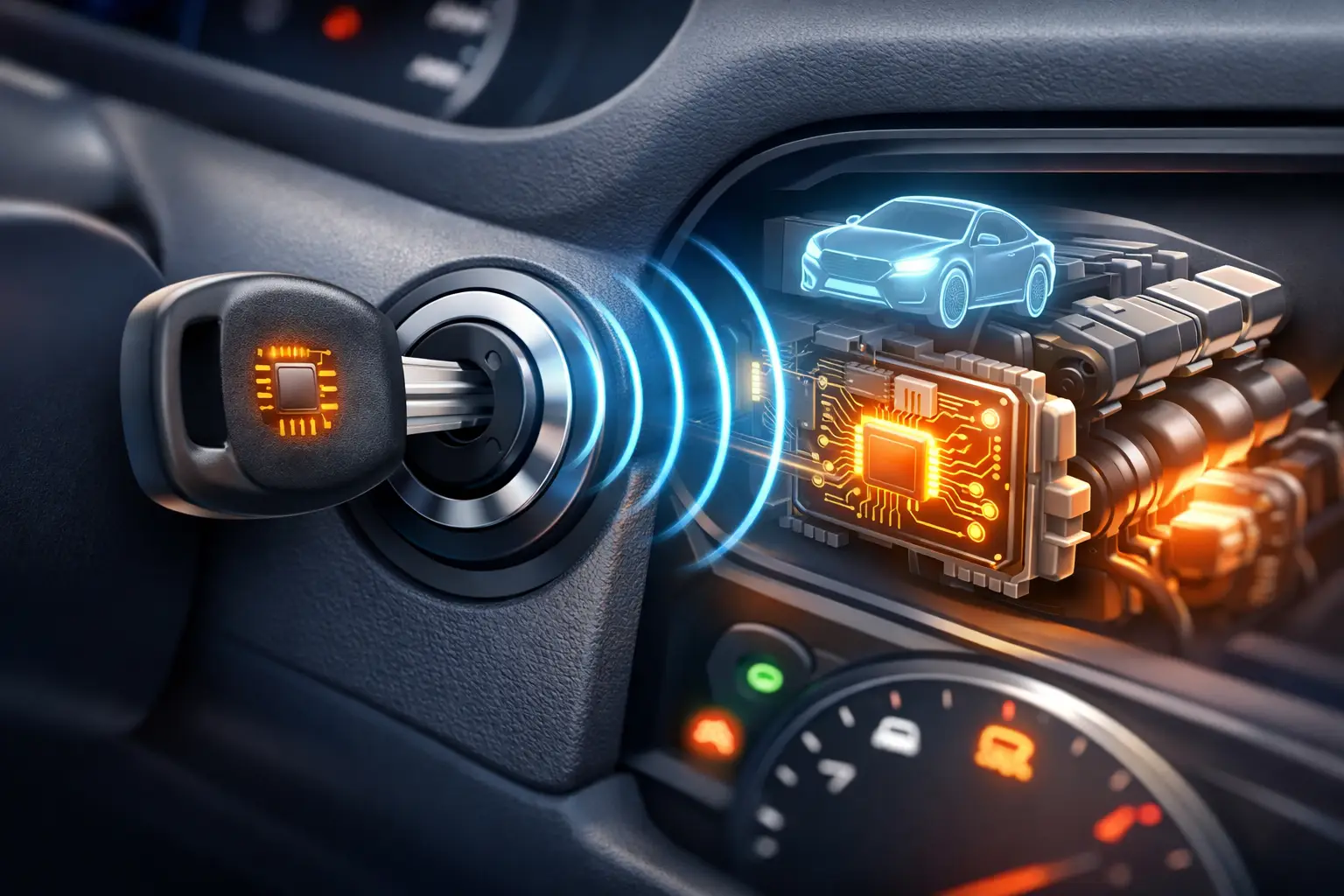
Your car may have a perfectly cut metal key, but it still may not start. That is because a transponder key has an electronic job to do before the engine is allowed to run. When that small chip is missing, damaged, or not programmed correctly, the key can turn in the ignition while the vehicle stays parked.
For drivers dealing with a lost key, a key that suddenly stopped working, or a spare that will unlock the door but will not start the car, the issue is often the immobilizer system. The good news is that this is a repairable problem. The right automotive locksmith can cut, program, test, and replace the key at your vehicle, including many all-keys-lost situations.
What Is a Transponder Key?
A transponder key is a vehicle key with a small electronic chip built into the head of the key or inside the remote. The chip holds an identification code that communicates with your car's immobilizer system. When you insert the key and turn it, or when you use a proximity-style smart key, the vehicle checks whether it recognizes that code.
If the code matches, the immobilizer allows the vehicle to start. If it does not match, the engine may crank but not run, or it may not crank at all. Depending on the vehicle, you might see a security light blinking or remaining illuminated on the dashboard.
This system became common because cutting a metal key alone should not be enough for someone to drive away in your vehicle. A duplicate key needs both parts completed correctly: the physical blade must fit the lock and ignition, and the electronic chip must be accepted by the vehicle.
Older transponder keys often look like ordinary keys with a thicker plastic head. Newer vehicles may use a remote head key, flip key, keyless remote, or smart key. The design has changed, but the purpose remains the same: verify the key before the car starts.
How a Transponder Key Talks to Your Vehicle
The communication happens quickly, usually in the moment you turn the key or press the start button. In a traditional ignition, a small antenna ring around the ignition cylinder reads the chip. The vehicle's computer then compares the chip's code with the codes stored in its memory.
Many basic systems use a fixed code. More modern systems may use encrypted or cryptographic identification, rolling-code technology, or more advanced programming procedures. That difference matters when replacing a key. A blank that looks right is not necessarily compatible, and a key that is compatible still has to be programmed with the correct equipment and procedure.
A smart key works differently in the driver's experience, but the security check is similar. The vehicle detects the smart key near the cabin, validates it electronically, and then permits push-button starting. If the battery in the fob is weak, the smart functions may fail even though an emergency key blade can still open the door.
This is why a replacement is not just a matter of buying the least expensive key online. The wrong frequency, chip type, board, or programming method can leave you with a key that does nothing for your vehicle. It can also create confusion when the real issue is a failing fob, a worn ignition antenna, or a vehicle battery problem.
Signs Your Transponder Key May Be Failing
A transponder chip usually does not wear down like the metal teeth of a key, but the key housing, remote electronics, battery contacts, and internal solder points can fail. Water exposure, a hard drop, a cracked shell, and years of daily use can all cause trouble.
One common warning sign is inconsistency. Your car starts after several attempts, starts only when the key is held a certain way, or recognizes one key but not another. Another sign is a security indicator on the dashboard when you attempt to start the vehicle. If a remote suddenly stops locking and unlocking the doors, that may be a simple battery issue, but it is worth checking whether the vehicle also recognizes the key for starting.
A damaged metal blade can create a separate problem. The transponder may be fine, yet the key may no longer turn smoothly in the ignition or door lock. Forcing it can damage the lock cylinder. A professional can inspect whether you need a new shell, a new blade, a remote repair, or a complete programmed replacement.
Do not assume every no-start condition is the key. A dead car battery, starter issue, ignition problem, or fuel-system failure can produce similar symptoms. But if the security light is involved, the vehicle rejects a known spare, or the problem began after the key was dropped or exposed to water, the key and immobilizer system deserve a closer look.
Lost Your Only Key? The Vehicle Can Still Be Serviced
Losing every working key is stressful because you cannot simply copy a spare. It does not mean the vehicle needs to be towed to a dealership or left unusable for days. An automotive locksmith with the right diagnostic and programming tools can often create and program a new key at the vehicle's location.
The process depends on the make, model, year, and security system. Some vehicles require a standard programmed key, while others need more involved immobilizer access, module work, or rekeying. For Lexus and Toyota owners especially, the correct key type and programming approach matter. Modern systems are designed to prevent unauthorized key creation, so proof of ownership is part of a legitimate replacement process.
A mobile service is especially useful when the vehicle is stuck at home, at work, in a parking garage, or after a long shift. Instead of arranging a tow and waiting for a service department, you can provide the vehicle details and location so the technician arrives prepared with the appropriate key, cutting equipment, and programming tools.
Why Cheap Replacement Keys Can Cost More Later
Buying a replacement key or fob can make sense when you know exactly what your vehicle requires and have a plan for programming. But there are trade-offs. Low-cost aftermarket keys vary widely in chip quality, remote range, fit, and long-term reliability. Some are sold as compatible even when they do not support every function your vehicle uses.
An original-style key, a high-quality aftermarket option, or a repaired existing fob may each be the right choice depending on the vehicle and your budget. The most practical approach is to confirm the part number, frequency, emergency blade style, and programming requirements before spending money.
There is also a difference between a key that is cut and a key that is fully working. Before the job is complete, test the door locks, trunk or liftgate, panic button, remote start if equipped, and most importantly, engine starting. For smart keys, test passive entry and push-button start as well. A proper replacement should not leave you guessing in the next parking lot.
Protect Your Next Working Key
Once you have a working replacement, making a spare is usually easier and less expensive than waiting until the last key is gone. Keep the spare somewhere secure and accessible, not inside the vehicle. For families, shared vehicles, and rideshare drivers, a tested spare can prevent a minor mistake from becoming a missed workday.
Protect the fob from moisture and avoid overloading it with heavy keychains that can stress the ignition cylinder. Replace a weak remote battery early, and if the shell is cracked, repair it before the circuit board is exposed. If your key works only occasionally, address it before it fails completely.
When you need a key cut, repaired, programmed, or replaced, Smartkeys can help identify the right solution based on your vehicle and the problem you are seeing. Have your make, model, year, location, and any working keys ready. That simple information helps get the right key and the right service to you faster.
A key problem should not decide whether you make it home, get to work, or keep your day moving. If your vehicle is showing signs of a transponder issue, get it checked while you still have options - and keep a tested spare ready for the moment you need it.