




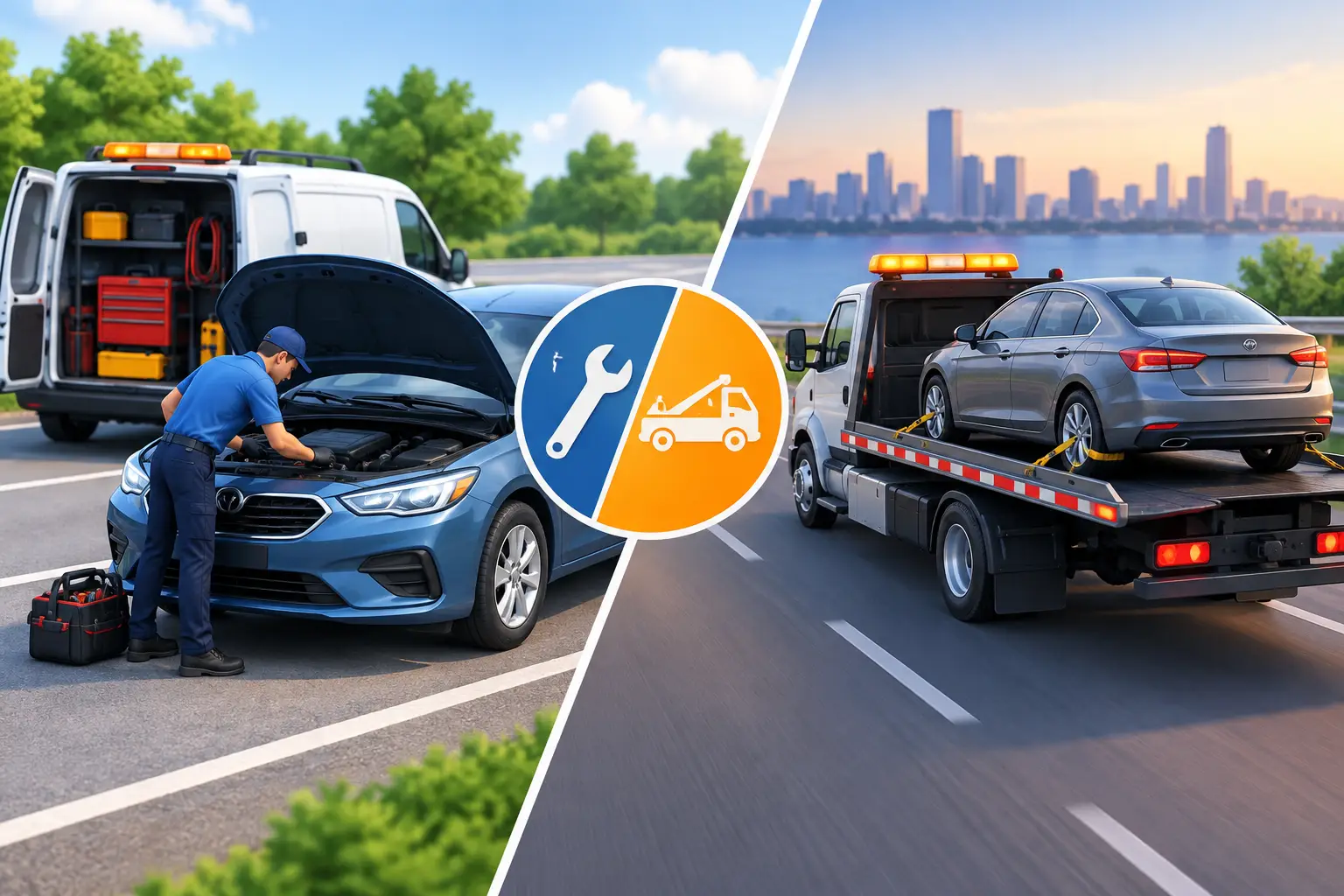
Your car is sitting in a parking lot, the key will not unlock it, or the engine will not recognize the fob in your hand. In the mobile service versus towing decision, the right answer depends on one question: can the problem be fixed where the vehicle is parked? When the issue is your key, remote, immobilizer, battery, or vehicle access, a mobile automotive locksmith can often get you moving without loading your car onto a truck.
Towing is essential when a vehicle cannot safely drive because of a mechanical failure, collision damage, flat tire, overheating issue, or major electrical problem. But towing a car to a shop or dealership will not automatically solve a lost smart key, a damaged remote fob, or an all-keys-lost situation. It can add time, expense, and another step before the actual key work begins.
Mobile Service Versus Towing: Start With the Failure
The fastest option is not always the closest one. It is the service that can diagnose and resolve the actual problem at the vehicle.
A mobile key service is usually the practical choice when you are locked out, your key was lost or stolen, the remote buttons stopped working, the key shell is broken, or your vehicle displays a key-related warning. A trained automotive locksmith can come to the location, verify ownership, cut an emergency key when needed, program a replacement fob or transponder key, and test that the vehicle starts.
Towing makes more sense when the car has a problem beyond the key system. If the engine will not crank because of a starter, fuel, charging, or internal mechanical issue, programming a new key will not fix it. The same is true if the car has collision damage, a wheel problem, or an unsafe condition that prevents driving.
Sometimes the symptoms overlap. A push-button-start vehicle that will not start may have a dead key fob battery, a weak vehicle battery, an unrecognized smart key, or a mechanical fault. Good roadside help starts with asking the right questions rather than assuming every no-start call needs a tow.
When Mobile Key Service Saves the Most Time
A tow truck has to pick up the vehicle, transport it, unload it, and leave it with a repair facility or dealership. If the problem is strictly key-related, you may then need to wait for key inventory, programming availability, and the next open service appointment. That process can turn a simple access issue into a full-day disruption.
Mobile automotive locksmith service removes the transport step. The technician comes to the driveway, office garage, grocery store, airport parking area, or roadside location where the problem happened. For drivers balancing work, school pickup, deliveries, or rideshare shifts, that convenience is more than a perk. It keeps a key problem from taking over the entire day.
This is especially valuable with modern Toyota and Lexus vehicles. Their smart keys, transponder systems, and immobilizers are designed to prevent unauthorized starting. Replacing one is not just a matter of cutting metal. The new key or fob must communicate correctly with the vehicle's security system.
For a lost-key situation, a capable mobile specialist may be able to create and program a new working key on-site, even if no spare is available. That means you do not have to move an immobilized vehicle simply because the original key is gone.
Common cases that usually do not require towing
If your vehicle is otherwise in good condition, mobile service is often the better first call for these situations:
- You locked the keys inside the car.
- Your smart key, remote fob, or transponder key is lost, damaged, or stolen.
- Your key turns but will not start the vehicle because of a chip or programming issue.
- The buttons on the remote stopped working, the key shell cracked, or the emergency key blade is damaged.
- You need a duplicate key made and programmed at home or work.
A dead fob battery can also look like a larger issue. Many vehicles have a backup start procedure, but it varies by model. If a fresh battery does not restore operation, a technician can determine whether the problem is the fob, programming, receiver, vehicle battery, or another system.
What Towing Is Actually Best For
Towing is not a failure or a last resort. It is the safe choice when driving the car could cause damage or put people at risk. A tow is appropriate after an accident, when the vehicle is overheating, when a tire or wheel has failed, when fluids are leaking, or when the engine, transmission, brakes, or steering have a serious problem.
It is also the right next step when key service confirms the key is working but the car still will not start. That diagnosis matters. It prevents you from paying for a replacement key when the real issue is a mechanical or vehicle-side electrical fault.
If you are unsure, tell the service provider exactly what happened. Mention whether the dash lights come on, whether the vehicle recognizes the key, whether a spare key works, whether the engine cranks, and whether any warning lights appeared. Those details help separate a key-system failure from a vehicle failure before a truck is dispatched.
Cost: Compare the Full Chain, Not Just the First Bill
A tow quote can look straightforward, but it may only cover transportation. Once the vehicle arrives at a dealership or shop, key replacement, programming, diagnosis, storage, and service fees may still be ahead. The final cost can be much different from the price of getting the car moved.
Mobile service combines travel, key cutting, programming, and testing into a solution focused on getting the vehicle operational at its current location. Pricing still depends on the make, model, year, key type, and whether every working key has been lost. A basic metal key and a proximity smart key are not the same job.
The lowest upfront price is not always the lowest overall cost. A cheap, unqualified key replacement can leave you with a fob that unlocks the doors but will not start the car, or a poorly cut emergency key that fails when you need it most. Modern automotive security systems require the right equipment and correct programming steps.
For drivers with a working spare, getting a duplicate before an emergency is usually the most affordable move. You can schedule the work where the car is parked and avoid the higher complexity of an all-keys-lost call later.
Questions to Ask Before You Call
Before arranging mobile service or a tow, take a minute to check your situation safely. Do you have another key nearby? Did the fob get wet, cracked, or dropped? Does the car respond to the lock and unlock buttons? Is the vehicle battery weak? Are you dealing with a true no-start, or does the dash show that no key is detected?
When you contact a provider, have the vehicle make, model, year, location, and a clear description of the symptoms ready. For key work, it also helps to know whether you have any working keys left and whether the car uses a traditional ignition, remote head key, or push-button start.
Do not attempt to force the door, pry open trim, or use an unverified online programming method during an urgent situation. That can damage weather seals, locks, electronics, or the key itself. A quick fix that creates a larger repair is rarely a bargain.
The Better Call Is the One That Restores Mobility
Mobile service and towing are not competing answers to every breakdown. They solve different problems. If your car needs mechanical repair or cannot be driven safely, arrange a tow. If the vehicle is healthy but your key is missing, broken, locked inside, or no longer communicating with the immobilizer, mobile key service is often the direct path back on the road.
Smartkeys focuses on bringing modern automotive key support to the vehicle, including cutting, programming, smart key replacement, remote repair, and all-keys-lost assistance for many Toyota and Lexus owners. The useful next step is simple: describe the vehicle, the key problem, and your location clearly. The right diagnosis can save you a tow that was never needed.