






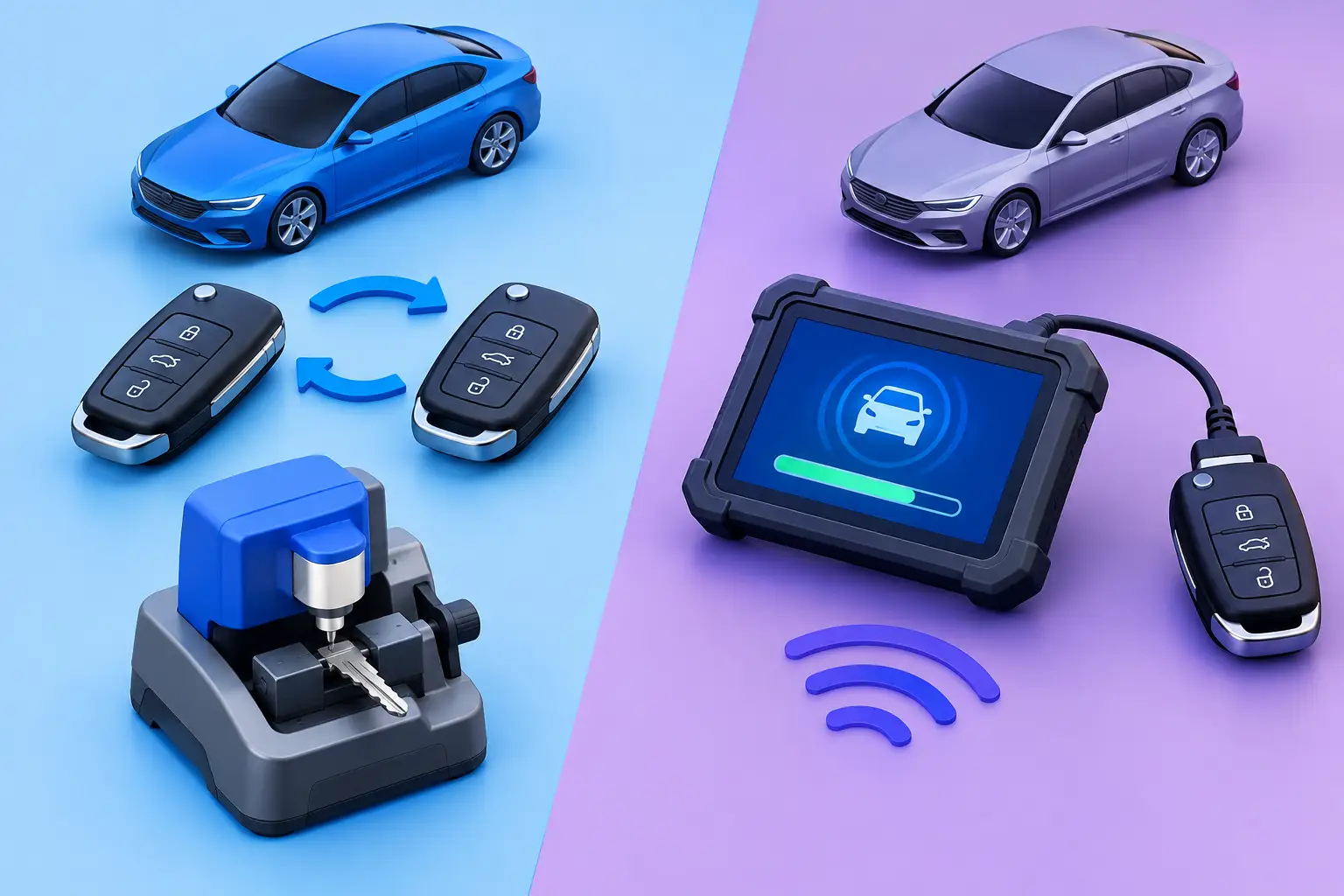
A spare car key should not leave you wondering whether it will actually start the vehicle. With key cloning versus key programming, the right answer depends on what is inside your current key, how your vehicle verifies it, and what you need the replacement to do. A copied metal blade may open a door, but modern vehicles usually need more before they will let you drive away.
For Toyota, Lexus, and many other late-model vehicles, the key is part mechanical tool, part electronic credential. It may contain a transponder chip, remote buttons, proximity functions, and encrypted data that communicates with the immobilizer. That is why a replacement process that sounds simple can require specialized equipment and vehicle-specific knowledge.
Key Cloning Versus Key Programming: The Core Difference
Key cloning copies information from an existing working key onto a compatible chip or replacement key. Think of it as making an electronic duplicate of credentials your vehicle already recognizes. When cloning is supported, the new key can often start the vehicle without adding a separate new entry to the car's immobilizer memory.
Key programming, sometimes called registration or pairing, adds a key to the vehicle's system or configures its electronic functions. The vehicle is taught to accept that specific key. Depending on the vehicle, programming can involve the transponder chip, remote lock and unlock buttons, push-button start functions, or all of them.
The difference matters because these services solve different problems. Cloning can be a fast option when you have a working key and a vehicle that supports a compatible clone. Programming is often required for smart keys, proximity remotes, encrypted systems, and situations where no working key remains.
Neither method is automatically better. The best choice is the one that gives you a dependable key, keeps the vehicle secure, and matches the way you use it.
When Key Cloning Makes Sense
Cloning is most useful when you want a backup before an emergency happens. You have a working key, it starts the car consistently, and you want another key for a spouse, teenager, family member, or safe storage. In the right situation, cloning can be efficient because the original key provides the information needed to create the duplicate.
It can also be a practical solution for some transponder keys with a separate mechanical blade. The blade is cut to match the vehicle's locks, while the chip is cloned from the existing key. Both parts have to be correct. A perfect chip cannot turn an uncut key blade, and a perfectly cut blade will not start an immobilizer-equipped vehicle if the chip is missing or not accepted.
Still, cloning has limits. Not every chip can be cloned, and not every cloned key supports every function of the original. A basic duplicate may start the vehicle but lack remote buttons, trunk release, or proximity entry. On newer smart-key systems, cloning may not be available at all, or it may not provide the same long-term reliability as registering a key directly to the vehicle.
A qualified automotive locksmith should test the original key first and confirm what functions you expect from the replacement. If you need a full-featured smart key, a lower-cost clone that only handles starting may not be the right fit.
When Key Programming Is the Better Route
Programming is usually the right route when the car needs to recognize a new electronic key as its own. This is common with push-button start vehicles, smart proximity fobs, remote head keys, and newer encrypted transponder systems. It is also the standard path after you purchase a compatible replacement key or fob that has never been registered to your vehicle.
Programming becomes especially important after all keys are lost. Without a working key to copy, there is nothing to clone. The locksmith must identify the vehicle's key system, gain authorized access, create or obtain the correct key, cut any emergency blade, and program the replacement to communicate with the immobilizer. In many cases, old lost keys can be removed from the vehicle's memory so they can no longer start it.
That last step matters for security. If a key was stolen, simply making another one does not solve the risk. Reprogramming or resetting the vehicle's authorized-key list may be the better move because it prevents the missing key from being used later. The exact options depend on the year, model, and system installed in the vehicle.
Programming can also correct problems that look like a dead key. A remote may have fresh batteries and still fail because it has lost synchronization, has internal damage, or was never properly paired. Diagnosis should come before replacement. It is frustrating to buy a new fob only to learn the real issue was a damaged circuit board, a weak vehicle battery, or a key that was not compatible in the first place.
What Your Vehicle Actually Needs
The key type is more useful than the word “copy” when deciding what service to request. A traditional metal key may only need cutting. A transponder key needs cutting plus an accepted immobilizer chip. A remote key may need mechanical cutting, transponder programming, and remote-button programming. A smart key may require proximity registration, emergency-key cutting, and verification of passive entry and push-button start.
Toyota and Lexus vehicles are a good example of why details matter. Two vehicles from the same manufacturer can use very different key technology depending on model year, trim, and start system. A standard ignition key and a proximity smart key are not interchangeable, even if the fobs look similar. The correct FCC information, part number, chip type, and vehicle compatibility must be confirmed before programming begins.
Used keys add another layer. Some are reusable in certain circumstances, while others are locked to the original vehicle or need specialized preparation before they can be registered again. A bargain fob that cannot be programmed is not a bargain. The right replacement should be selected for the vehicle first, then cut and programmed correctly.
Cost, Convenience, and Security Trade-Offs
Cloning may cost less or take less time when the vehicle supports it and you only need a reliable basic spare. Programming can involve more diagnostic work, security access, and equipment, particularly for late-model encrypted systems. That does not make it unnecessary. It reflects the fact that the vehicle is verifying a security credential, not just reading a piece of metal.
The cheapest option is not always the best value. Consider whether you need remote functions, whether the replacement will be a daily-use key, and whether a lost key creates a security concern. A commuter who needs a backup to keep in a drawer may choose differently from a rideshare driver who needs every button and proximity feature working every day.
Mobile service also changes the equation. If the vehicle will not start, transporting it to a dealership can add time, towing costs, and disruption. A properly equipped mobile automotive locksmith can often handle cutting, programming, testing, and all-keys-lost service where the vehicle is parked. Smartkeys focuses on this kind of modern key work, including electronic and crypto key systems that need more than a basic hardware-store copy.
Before You Request a Replacement Key
Having a few details ready speeds up the process and helps prevent ordering the wrong key. Provide the make, model, year, and whether the vehicle uses a key ignition or push-button start. Explain whether you have a working key, whether the key can start the car, and which functions have stopped working.
For service, expect to show proof that you own or are authorized to access the vehicle. Legitimate key work protects drivers as well as vehicles. A professional should not bypass ownership verification just because the situation feels urgent.
If you still have one working key, do not wait until it fails or disappears. Creating a tested spare while the original is available is usually simpler than resolving an all-keys-lost emergency. Store the spare somewhere secure, not inside the car, and test it occasionally before you need it on a rushed morning.
A key replacement should leave you with more than a fob that lights up. It should start the vehicle, operate the functions you paid for, and give you confidence that the keys in your hands are the only ones your vehicle recognizes.