






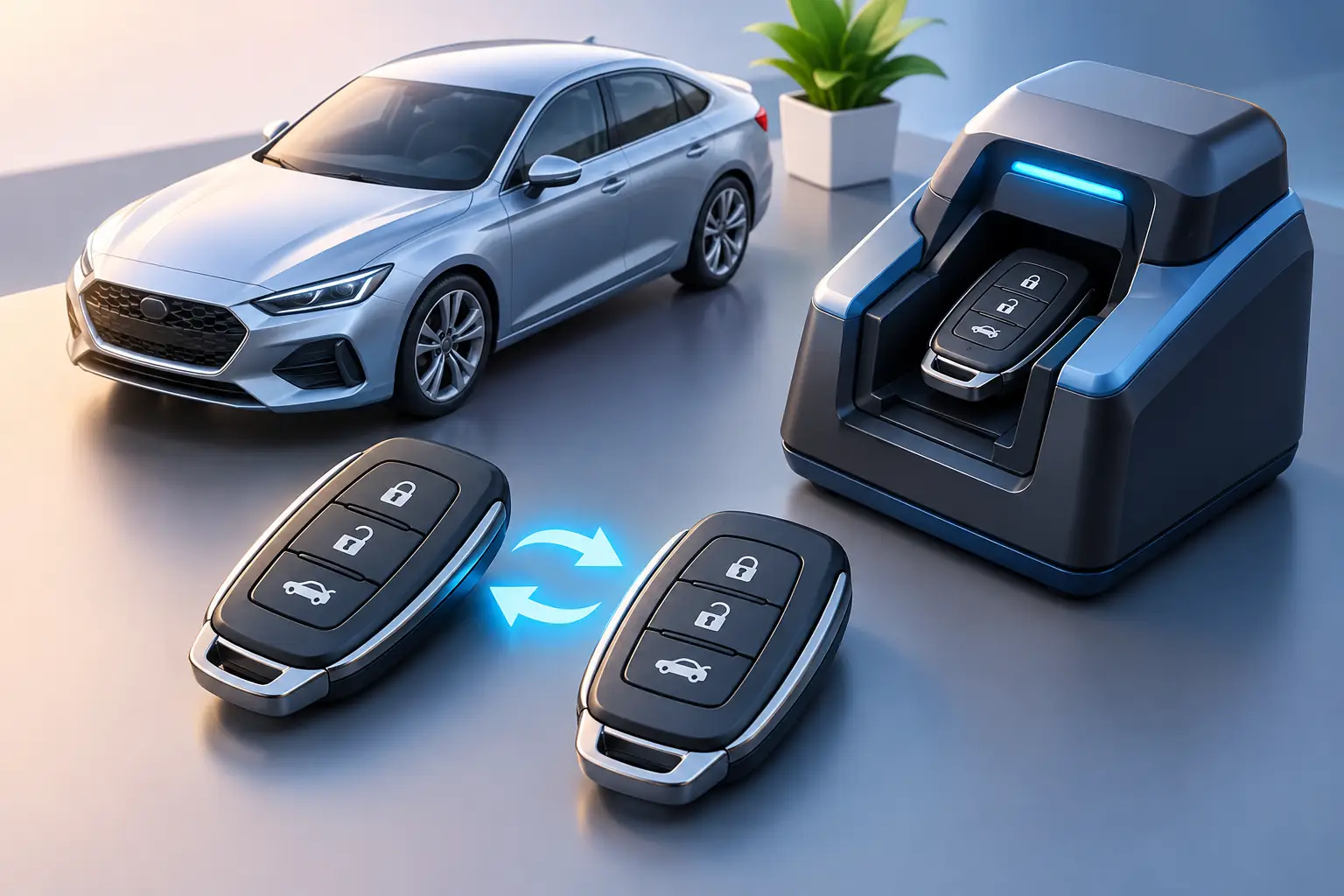
A spare key can turn a stressful morning into a minor inconvenience. But key cloning is not as simple as copying a house key, especially when your vehicle uses a transponder chip, remote fob, push-button start, or smart key system. The right solution depends on your vehicle, the key technology it uses, and whether you still have at least one working key.
For many drivers, the goal is straightforward: get a reliable duplicate before the only key is lost, damaged, or stops communicating with the car. A qualified automotive locksmith can identify what your vehicle needs, cut the key if needed, and program it so it works correctly with the immobilizer and remote features.
What Is Key Cloning for a Car?
Automotive key cloning is the process of copying the electronic information from an existing working key or transponder into another compatible key. When done on a vehicle system that supports it, the cloned key can start the engine because it carries matching chip data.
That electronic chip is the part many drivers do not see. On many vehicles, the metal blade may unlock the door, but the engine will not start unless the vehicle recognizes the transponder or smart-key signal. The immobilizer is designed to prevent an unauthorized key from starting the vehicle.
Key cloning can be a useful option for certain older and mid-generation transponder systems. It is often fast because the technician can work from an existing key rather than accessing vehicle security functions in the same way required for a full new-key enrollment.
Still, cloning is not the best answer for every vehicle. Many late-model cars, including newer Toyota and Lexus models, use encrypted smart key systems that require dedicated programming procedures. In those cases, a replacement key must be professionally programmed to the vehicle rather than simply copied.
Cloning, Cutting, and Programming Are Different Jobs
These terms are often used interchangeably, but they describe different parts of a car key replacement.
Key cutting creates the physical blade that turns the door lock or ignition. If your car has an emergency insert key inside a smart fob, that small metal key must be cut to match your vehicle's locks.
Key cloning copies data from one compatible transponder key to another. It can work well on supported systems, but it does not automatically add every remote feature or apply to every vehicle.
Key programming introduces a new key, remote, or smart fob to the vehicle's security system. This is typically required for push-to-start keys, proximity keys, many remote fobs, and modern encrypted immobilizer systems.
A professional may need to perform more than one of these services. For example, a Toyota owner may need an emergency key cut, a replacement smart key supplied, and the smart key programmed for locking, unlocking, and starting the vehicle. The best process is the one that gives you a dependable key, not simply the quickest copy.
When Key Cloning May Make Sense
Key cloning is often worth asking about when you have one working transponder key and want a backup without waiting for an emergency. It can also be practical for vehicles with a conventional ignition key and a compatible chip system.
The value is not just convenience. A duplicate can prevent a much more expensive situation if the original key is lost. When every working key is gone, the service process may involve verifying ownership, accessing the vehicle security system, cutting a new key, programming it, and sometimes erasing missing keys from the vehicle memory.
A cloned key can have limitations. Because it may share the original key's electronic identity, it is not always the best choice for every security situation. If a key has been stolen, for example, the smarter approach may be to program new keys and remove the missing key from the vehicle's authorized key list, when the vehicle system allows it.
Why Modern Smart Keys Usually Need Programming
Push-button start vehicles use a more advanced conversation between the key and the vehicle. The car looks for the correct encrypted signal before allowing the engine to start. Remote buttons, proximity access, trunk release, and panic functions may also need to be matched to the vehicle.
This is why a cheap online fob is not automatically a working replacement. A key shell or remote may look identical to your original, yet it may have the wrong chip, wrong frequency, incorrect board, or no programming. Even the correct replacement needs the right cutting and programming process.
Toyota and Lexus vehicles are a good example. Their keys and smart fobs can vary by year, trim, ignition type, and factory security system. Two fobs that look nearly the same may not be interchangeable. Checking the exact make, model, year, and available working keys before service helps avoid delays and unnecessary cost.
What a Professional Automotive Locksmith Checks First
A proper key service starts with the vehicle details, not a guess based on a photo. The technician needs to know the make, model, year, key type, and whether the vehicle has a working key available.
They will also confirm whether the vehicle uses a standard transponder, remote-head key, proximity smart key, or a more advanced encrypted system. From there, they can determine whether cloning is supported or whether programming a new key is the correct route.
For security, be prepared to show proof that you own or are authorized to use the vehicle. A reputable automotive locksmith should take that seriously. Modern car key work is access and security work, not just key cutting.
Avoid the “One Key Is Enough” Problem
Drivers often wait until the last key is lost because the existing key seems fine. Then the battery dies, the fob gets wet, the buttons wear out, or the key disappears at work, school, or the airport. What could have been a quick duplicate becomes an urgent all-keys-lost situation.
The most practical time to get a spare is while your current key still works. You can test the duplicate before you need it, keep it with a trusted family member, or store it safely away from the vehicle. For households with more than one driver, two working keys are often the minimum that makes sense.
If your remote case is cracked, buttons are failing, or the emergency blade is missing, repair or replacement may be a better investment than waiting for total failure. A fresh shell can solve cosmetic damage, but it will not fix a damaged electronic board or an unprogrammed key.
Get the Right Key, Not Just a Copy
Key cloning can be a fast, cost-effective solution for compatible vehicles, but modern automotive keys are not one-size-fits-all. The right service may involve cloning, cutting, programming, remote repair, or replacing a complete smart key.
If you have one working key, act before it becomes none. Smartkeys can help identify the correct option for your vehicle and get a reliable backup in your hand, so your next lost-key moment does not have to stop your day.