






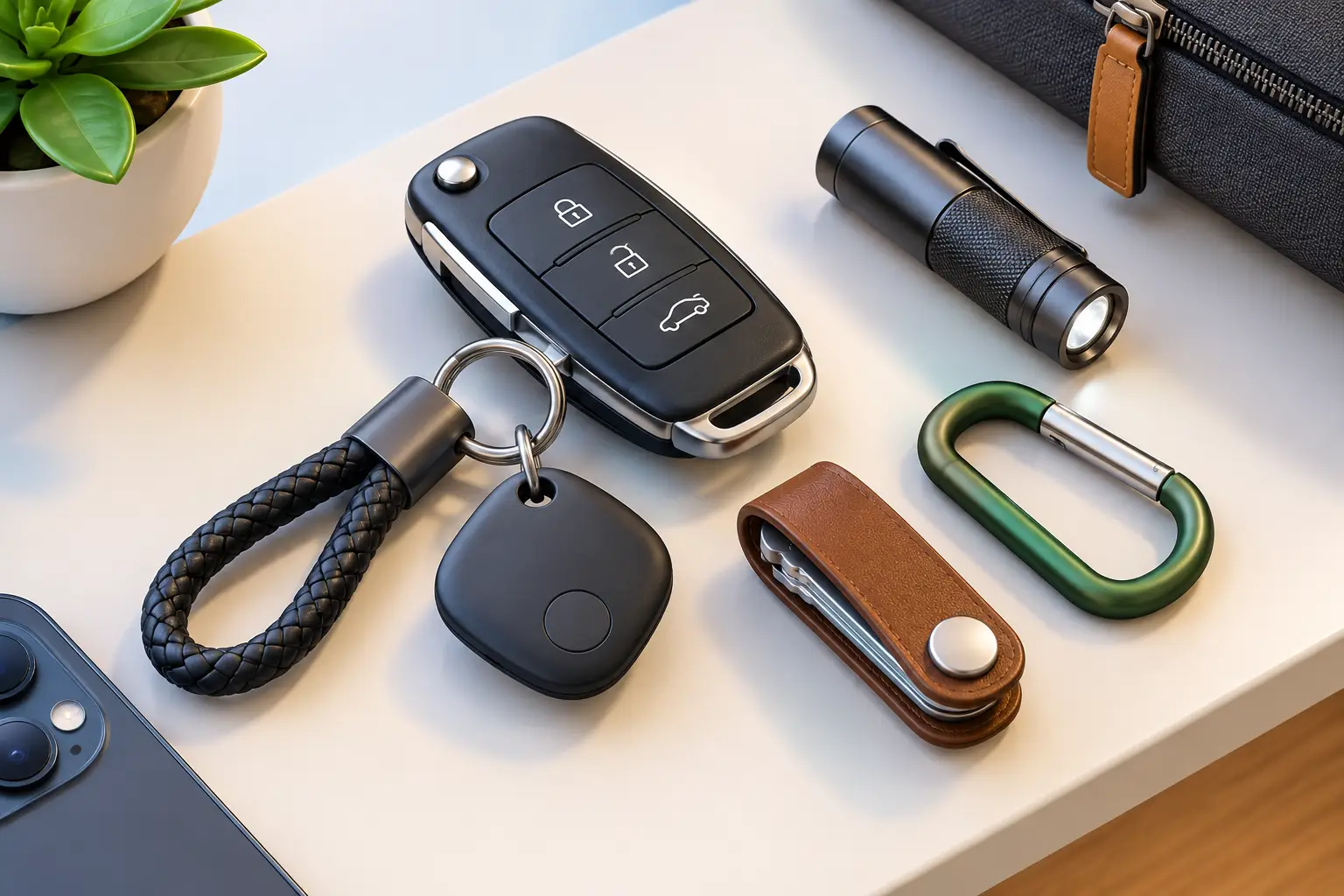
Your vehicle key gets dropped in parking lots, squeezed into crowded pockets, exposed to coffee spills, and used dozens of times a week. The right car key accessories can protect an expensive smart key and make a lockout less likely. The wrong ones can add bulk, interfere with buttons, or hide a problem that needs real repair.
For most drivers, the best accessory is not the flashiest one. It is the one that keeps the key working, easy to find, and ready when you need to leave. Here is how to choose accessories that make sense for modern remote fobs, transponder keys, and Lexus or Toyota smart keys.
Car Key Accessories Should Solve a Real Problem
A modern vehicle key is more than a piece of metal. It may contain a transponder chip, remote-lock buttons, a proximity antenna, and an emergency key blade. Replacing or programming it can require specialized equipment, so protecting the key you already have is usually money well spent.
Start with the issue you are trying to prevent. If your fob has scratched edges or loose buttons, a protective cover may help. If you regularly misplace your keys, a tracker may be the better purchase. If your key ring looks like a hardware-store display, reducing the weight on it could protect the ignition area and make the fob easier to carry.
Avoid buying accessories simply because they fit the general shape of your key. Button placement, emergency-key access, charging ports on rechargeable fobs, and signal performance all matter. A cover made for a similar model can be frustrating if it makes the panic button hard to press or prevents the backup key from sliding out.
Protective Fob Covers Are the Everyday Favorite
A fitted key fob cover is one of the most useful upgrades for drivers who carry a smart key every day. Silicone covers absorb minor impacts and provide better grip. They are inexpensive and practical, especially for keys that often end up at the bottom of a bag, in a cup holder, or in the hands of a child.
Leather-style cases can look cleaner and offer good scratch protection, but quality varies. A poorly fitted case may loosen over time or make it harder to feel which button you are pressing. Metal cases can offer strong exterior protection, but they should be selected carefully. Thick metal surrounding the wrong part of a fob can affect signal range on some designs.
Choose a cover designed for your exact key layout. Confirm that lock, unlock, trunk, panic, and remote-start buttons line up correctly. Also check that you can remove the mechanical emergency key without taking the whole case apart.
A Key Shell Is Different From a Cover
Drivers often use the terms interchangeably, but they solve different problems. A cover goes around a working key. A replacement key shell replaces the damaged outer housing of a remote or fob while keeping the original electronic board, transponder, and key blade when applicable.
If the buttons have worn through, the key-ring loop has broken, or the plastic housing is cracked, a shell can be a smart repair option. It may save the electronics inside without requiring a complete replacement key. However, transferring components takes care. A damaged circuit board, torn button contact, misplaced transponder chip, or incorrectly cut blade can leave you with a key that still will not start the vehicle.
When the key works electronically but looks worn out, a shell may be the right answer. When it has intermittent operation, water damage, weak range, or a no-start condition, the issue may be internal. An accessory cannot repair a failing immobilizer chip or a damaged remote board.
Small Add-Ons That Help Prevent Lockouts
A key tracker is useful for drivers who lose keys around the house, office, gym, or grocery store. It will not locate a fob that was stolen or left miles away with perfect accuracy in every situation, but it can turn a 20-minute search under couch cushions into a quick find.
Look for a tracker that is compact enough not to pull on the key-ring loop. It should also have a battery plan you will actually follow. A tracker with a dead battery is just extra weight. If you use one, test its alert sound and location features before the day you urgently need them.
A simple split ring or short tether can help, too, but keep the setup light. Large keychains, heavy decorative charms, and thick bundles of keys are not ideal. They make a smart fob bulky, snag on pockets, and put unnecessary strain on small attachment points. For vehicles with a traditional ignition cylinder, a very heavy key ring can also contribute to wear over time.
Many drivers benefit more from a dedicated place for keys than another gadget. A small tray near the front door, a consistent pocket in your work bag, or a hook away from public view can prevent daily misplacement. The accessory does not have to be attached to the fob to be useful.
Signal-Blocking Pouches Have a Place, With Trade-Offs
Some smart-key owners use Faraday pouches or signal-blocking cases to reduce the chance of relay theft. These pouches block the fob's radio signal while it is inside. For drivers who park outside, especially in areas where relay theft is a concern, that added layer can offer peace of mind.
The trade-off is convenience. Passive entry will not work while the fob is in the pouch, so you must remove it before unlocking or starting the vehicle. Quality also matters. A worn pouch may stop blocking the signal, and not every vehicle or parking situation calls for one.
Test any signal-blocking pouch at your own vehicle. With the fob enclosed, stand next to the door and confirm the vehicle does not respond. Then remove the fob and make sure normal operation returns. Treat the pouch as one part of good vehicle security, not a replacement for locking the car, securing valuables, and addressing damaged doors or locks.
Keep the Emergency Key Accessible
Many push-button-start vehicles have a mechanical emergency key hidden inside the smart fob. It is easy to forget about until the fob battery dies or the vehicle battery is weak. That small key can provide access to the door lock, but only if you know where it is and can remove it.
Do not bury the release mechanism under tape, oversized decorations, or a rigid accessory that requires tools to remove. Take a minute at home to locate the emergency key, learn how it releases, and identify the concealed door-lock cylinder on your vehicle. This is especially useful for Lexus and Toyota owners, whose smart-key systems may still rely on the emergency blade when power is unavailable.
The emergency key is not always a complete solution. Depending on the vehicle, you may still need to hold the fob in a designated backup area to start it when the fob battery is low. Your owner's manual can identify that location, and an automotive key specialist can help if the system does not recognize the fob.
Spare Keys Are the Accessory That Saves the Worst Day
A duplicate working key is less exciting than a new fob cover, but it is usually the accessory with the biggest payoff. Losing your only key can mean towing, dealer delays, higher costs, and a vehicle that cannot move. Having one tested spare changes that situation completely.
Keep the spare somewhere secure and separate from the everyday key. Do not leave it in the glove box or hide it under the vehicle. Those locations are accessible to thieves and do not help if you are locked out. A trusted family member, a secure home location, or a protected work location is usually more useful.
A spare must be fully functional, not just physically cut. For modern vehicles, it needs the correct transponder or smart-key programming to start the car. Test it occasionally, especially after a vehicle battery issue, key repair, or programming service.
Know When an Accessory Is Not the Fix
If the lock button works only sometimes, the range has suddenly dropped, the fob was soaked, or the vehicle displays a key-not-detected message, start with the basics. Replace the fob battery with the correct type and make sure its contacts are clean and properly seated. A fresh battery may solve a simple problem, but it will not repair corrosion, a cracked circuit board, or a lost programming connection.
Likewise, a new shell cannot restore buttons that fail because the electronic switch beneath them is damaged. A signal-blocking pouch will not solve a security concern caused by a missing key. And a decorative cover cannot keep a key together if its internal board is loose.
When a key is damaged, lost, or unreliable, getting it checked early can prevent the bigger emergency: being stranded with no working key at all. Smartkeys can help with modern key repair, replacement, programming, and emergency all-keys-lost situations. Keep your key protected, keep your spare tested, and act on small warning signs before the next trip depends on a fob that may not respond.