






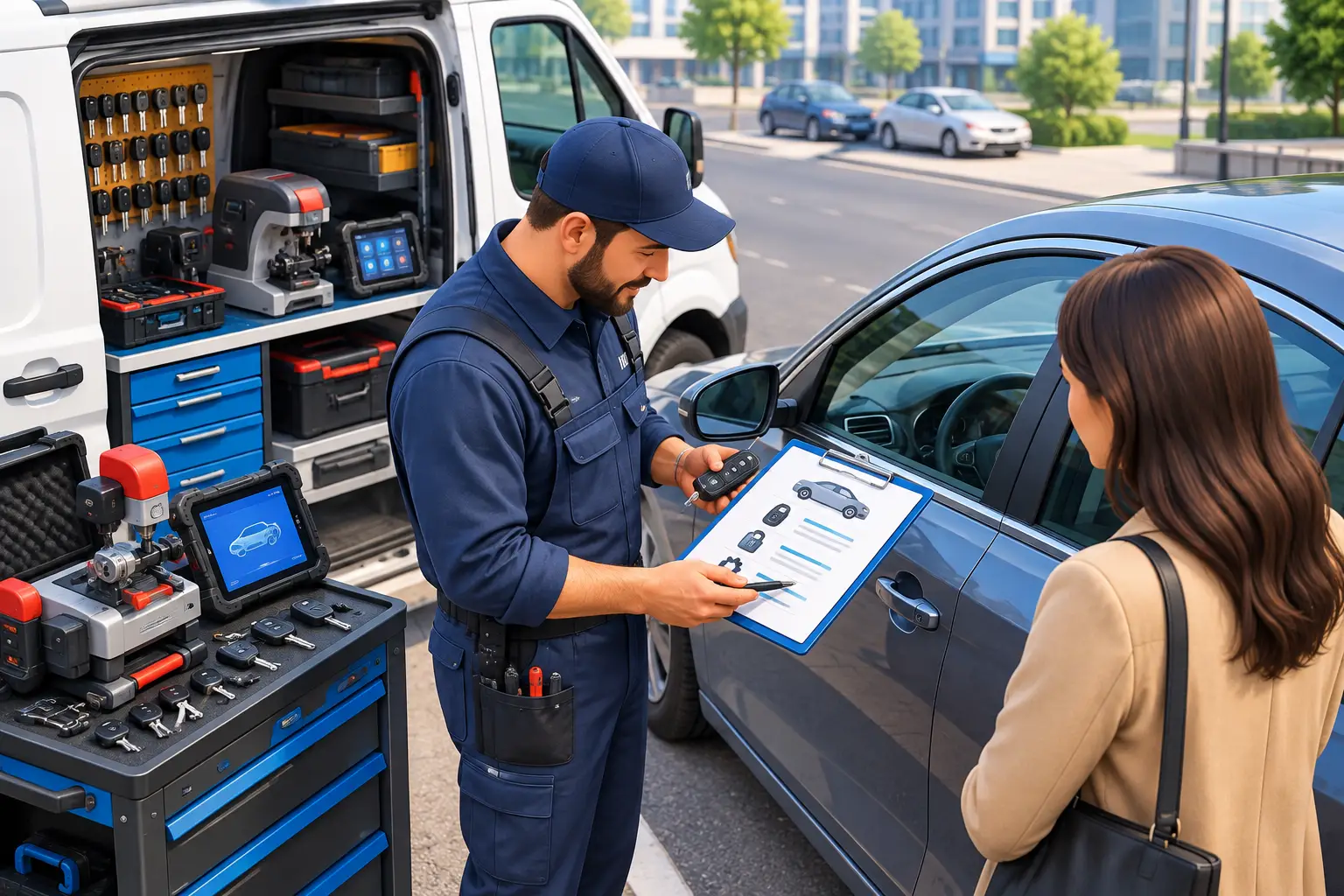
A misplaced smart key can stop a normal day in minutes. You may be parked at work, loading kids into the car, or trying to start a rideshare shift when the vehicle will not recognize the fob. This automotive locksmith service cost guide explains what you are paying for, why quotes vary, and how to get the right help without guessing.
The short answer is that automotive locksmith pricing depends on the vehicle, the key technology, your location, and whether any working key remains. A basic metal key is one job. Replacing and programming a push-button-start smart key with no original key available is a very different job.
What an automotive locksmith service usually costs
For many drivers, a mobile automotive locksmith is often a more affordable and faster alternative to arranging dealership key service. Still, there is no honest one-price answer. A locksmith needs the vehicle make, model, year, key type, and service location before giving a dependable quote.
A simple vehicle lockout may cost less than creating a replacement key because there is no key programming involved. A duplicate transponder key generally costs more than a traditional key since the chip must communicate correctly with the vehicle's immobilizer. Smart keys and proximity fobs usually cost more again because they combine remote functions, encrypted electronics, and programming.
The highest-cost scenario is usually an all-keys-lost call. When no working key is available, the technician may need to access vehicle security information, cut an emergency key, program a new remote or smart key, and confirm the car starts. On certain late-model vehicles, this can also involve specialized procedures designed to protect the owner from unauthorized key creation.
For a realistic quote, be ready to provide your vehicle identification number, make, model, year, and a photo of your existing key if you still have one. If you are stranded, share your exact location and whether the vehicle is accessible. Those details help avoid a vague estimate that changes once the technician arrives.
The biggest factors behind automotive locksmith service costs
Your vehicle's year, make, and model
Newer vehicles generally use more advanced anti-theft systems. Toyota and Lexus models, for example, may use transponder, remote-head, or smart key systems that need vehicle-specific programming. The right replacement is not just a fob that looks similar. It has to match the vehicle's frequency, chip type, and security system.
Some models require more labor or specialized equipment than others. Luxury trims, push-button-start systems, and recently released vehicles can also have limited key availability. That does not mean every modern key will be expensive, but it does mean price should follow the actual system in your car, not a generic online estimate.
The type of key you need
The key itself is a major part of the total. A mechanical key needs accurate cutting. A transponder key needs cutting plus chip programming. A remote fob adds lock, trunk, panic, and sometimes remote-start functions. A smart key must be recognized by the vehicle and may include an emergency insert key as well.
A damaged key can be less expensive to solve than a lost one if its electronics can be repaired or its case can be replaced. Cracked shells, worn buttons, and weak batteries do not always require a fully new programmed key. However, water damage, broken circuit boards, or a fob that is no longer detected may call for replacement and programming.
Whether you have a working key
Having one functioning key can make a big difference. It gives the technician a way to verify the right key profile and, on many vehicles, makes adding a spare simpler. That is why a duplicate key is usually best handled before an emergency happens.
If every key is gone, the job becomes more involved. The locksmith must establish ownership, identify the correct key solution, and program the vehicle from scratch. You are paying for the key and labor, but also for the equipment and security knowledge required to return the car to safe operation.
Mobile service, time, and location
Mobile service brings the solution to the vehicle, which is valuable when the car cannot move. The service area, driving distance, traffic, parking conditions, and time of day can affect the final price. An after-hours call, weekend request, or roadside location may carry a higher service charge than a scheduled daytime appointment.
That added cost is not automatically a bad deal. Compare it with towing the vehicle, arranging transportation, waiting for a dealership appointment, and potentially paying separate programming charges. For a driver who needs to get moving now, a qualified mobile automotive locksmith can be the lower-stress option.
What should be included in a clear quote?
A good quote explains the work, not just a starting price. Ask whether the stated amount includes the replacement key or fob, key cutting, programming, mobile service, taxes, and any after-hours charge. If you are requesting an all-keys-lost service, ask whether the quote includes making the vehicle start, not simply supplying a remote.
It is also reasonable to ask whether the replacement is an original equipment key, an aftermarket-compatible key, or a refurbished original. Each option can have a different price and availability. Quality matters most when a key must reliably start the vehicle and operate every function you use daily.
Be cautious with unusually low advertisements that offer a price before asking what you drive. A real quote for a modern vehicle requires basic information. If a provider cannot explain what is included, you could face add-on charges after service has started.
Locksmith vs. dealership: cost is only one part of the decision
Dealerships can be a sensible choice for certain warranty concerns, rare parts, or vehicles requiring manufacturer-only support. The trade-off can be scheduling delays, towing if you have no key, and separate charges for the key, cutting, and programming.
An automotive locksmith focuses on the access problem where the vehicle sits. The right specialist can cut and program many transponder keys, remotes, and smart keys on-site. For Lexus and Toyota owners, Smartkeys can provide focused support for modern electronic keys, including situations where every working key has been lost.
Neither route is automatically right for every vehicle. The best choice depends on the vehicle's security system, the key needed, your timing, and who can clearly explain the full cost before work begins.
How to keep your next key bill lower
The most cost-effective move is making a spare while one key still works. Store the spare somewhere secure away from the vehicle, not in the glove box or under the bumper. If a fob is showing early trouble, such as intermittent buttons, a loose case, or reduced detection range, address it before it becomes a no-start situation.
Protect the key from water, hard drops, and extreme heat. Replace the fob battery when warning signs appear, but remember that a new battery will not repair internal electronic damage or a key that has lost programming. If the vehicle does not recognize the key after a battery change, get it checked rather than repeatedly trying to start it.
When you need service, gather your vehicle details, proof of ownership, and location before you call or text. A few accurate details can turn a stressful key problem into a straightforward repair, duplicate, or replacement - with a price that makes sense before your key is on the way.