






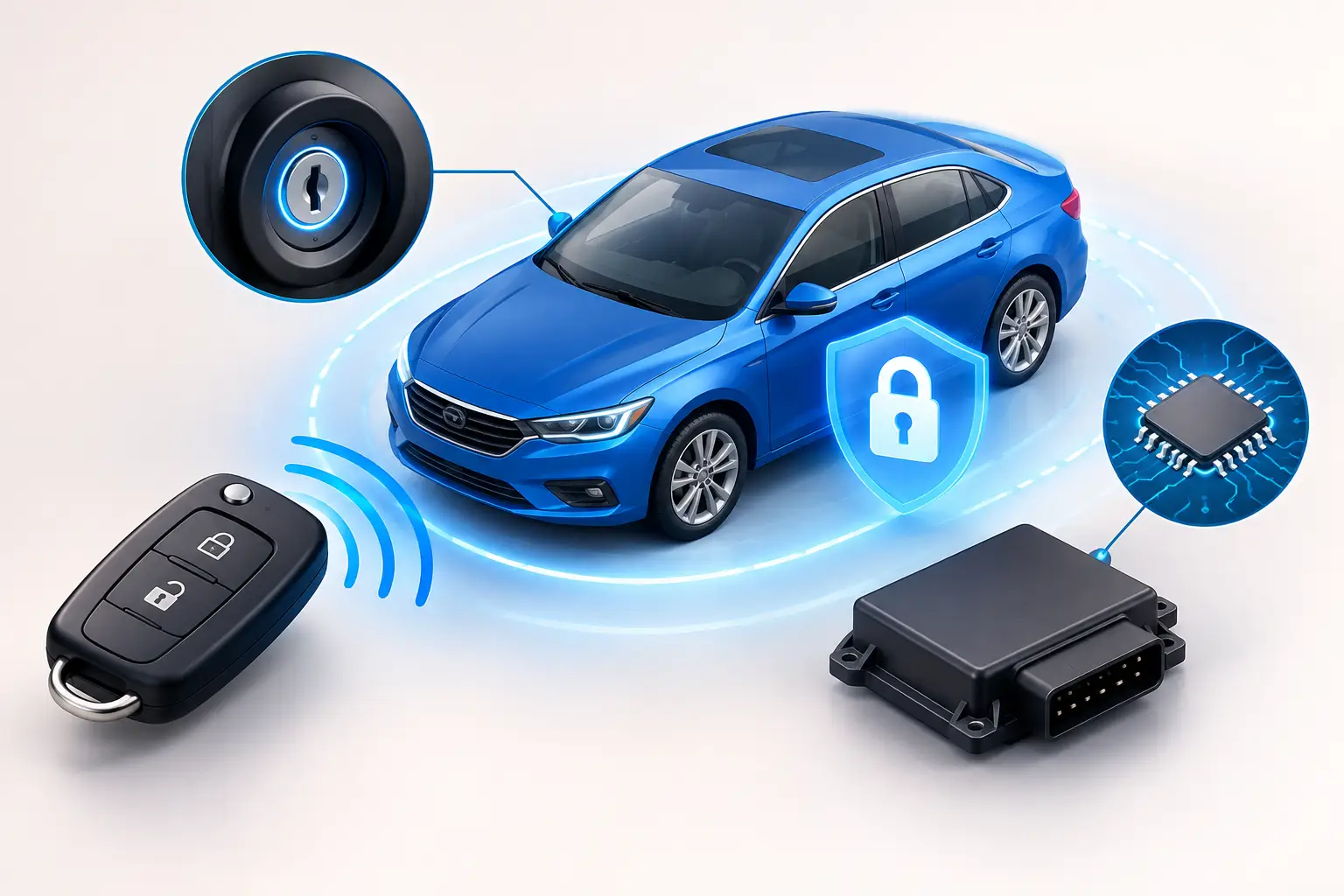
Your vehicle may crank normally, the battery may be fine, and the dashboard may light up as usual - yet the engine still will not start. In many late-model vehicles, that points to the security system built into your key. Understanding vehicle immobilizer systems can make that frustrating moment less mysterious and help you get the right kind of help without wasting time or money.
An immobilizer is designed to stop a vehicle from starting unless it recognizes an authorized key, remote, or smart key. It is one of the reasons a copied metal key alone often cannot start a modern car. The key may turn the ignition or unlock the door, but the vehicle needs an electronic confirmation before it allows the engine to run.
What a vehicle immobilizer actually does
An immobilizer is an anti-theft system that connects your vehicle's key, security computer, and engine control system. When you press the start button, insert a key, or turn the ignition, the car checks for a valid electronic signal. If that signal is missing, damaged, unrecognized, or incorrectly programmed, the immobilizer can prevent the engine from starting.
Depending on the vehicle, the system may use a transponder chip inside the key, a proximity smart key, an electronic key card, or a remote fob with encrypted credentials. Many newer vehicles use rolling codes or cryptographic data, so the information exchanged between the key and vehicle changes or is protected against simple copying.
This is why modern automotive key work is more than cutting a blade. The physical key and the electronic identity of the key are separate pieces of the job. Both have to be right.
How the system recognizes your key
In a traditional transponder-key setup, a small chip inside the key communicates with an antenna near the ignition. When the key is turned, the vehicle reads that chip and compares its identity with the authorized keys stored in the vehicle's system. If the match is approved, the engine can start.
Push-button-start vehicles work differently, but the purpose is the same. The vehicle looks for an authorized smart key within range. It verifies the key's electronic credentials before allowing ignition. That is why a weak smart-key battery can create confusing symptoms: the key may still unlock the doors at close range but fail to communicate reliably when you try to start the car.
For Toyota and Lexus owners, the electronic key system can be especially sophisticated. A replacement has to match the vehicle's compatible key type, frequency, and security requirements, then be properly programmed. The correct-looking fob is not automatically a working fob.
The immobilizer is not the same as the alarm
An alarm makes noise or flashes lights after unauthorized entry. An immobilizer focuses on preventing the engine from starting without a recognized key. The two systems may work together, but they solve different problems.
A vehicle can have no alarm sounding at all and still refuse to start because the immobilizer does not recognize the key. Conversely, an alarm issue does not always mean the immobilizer has failed. Separating those possibilities early helps avoid replacing parts that are not actually the problem.
Signs your immobilizer or key may be the issue
A no-start condition has many possible causes, including a dead battery, starter problem, fuel issue, or ignition fault. Still, several signs make an immobilizer or key problem more likely:
- A security or key warning light stays on, flashes, or appears with a key-related message.
- The engine cranks but will not start, especially after a key was lost, damaged, wet, or replaced.
- A push-button-start vehicle says no key detected even when the fob is inside the car.
- One key starts the vehicle while another key only unlocks the doors or does nothing.
- The vehicle stopped starting after a remote, smart key, or ignition component was repaired or replaced.
Those clues do not guarantee an immobilizer fault, but they give a trained automotive locksmith a useful starting point. A proper diagnosis looks at the key, the vehicle's stored programming, the key battery where applicable, and the vehicle's response during a start attempt.
Why a new key may not start the car
Drivers often assume a replacement key is ready as soon as it is cut or its buttons work. That assumption causes a lot of avoidable stress. Remote lock and unlock functions, emergency-key cutting, and engine authorization are often separate functions.
For example, a replacement fob may have the correct shell and buttons but lack a programmed transponder or smart-key credential. A metal emergency key may open the driver's door, yet it cannot authorize a push-button-start system by itself. In other cases, an aftermarket key may be compatible with the vehicle but still require precise programming before it will work.
The trade-off is straightforward. A low-cost blank or used fob can look like a bargain, but it may not be the right part, may have hidden electronic wear, or may not be eligible for programming on your particular vehicle. A properly selected and programmed replacement costs more than a simple metal copy because it includes security-system work, but it is built to restore dependable daily use.
When the key is the problem and when the car is the problem
Keys take more abuse than most drivers realize. They get dropped, crushed in pockets, exposed to moisture, left in hot vehicles, and fitted with worn buttons or cracked shells. Damage can affect the battery contacts, circuit board, transponder chip, or antenna components inside the fob.
Sometimes the fix is simple. A depleted battery, damaged key shell, or worn emergency blade can be repaired without replacing every component. Other times, the electronics have failed or the key has been erased from the vehicle's authorized memory, making a programmed replacement the practical answer.
The vehicle side matters too. A failing vehicle battery can trigger low-voltage behavior that looks like a key issue. Damage around the ignition cylinder, smart-key antennas, wiring, or the vehicle security module can also interrupt recognition. That is why a trustworthy diagnosis should not jump immediately to an expensive replacement key or control module.
Lost all keys? The vehicle can still be serviced
Losing the only working key feels like a dealership-only problem, especially with a smart key or immobilizer system. It is not. A qualified automotive key specialist can identify the vehicle's key system, produce a compatible key, cut the emergency blade when needed, and program the replacement to the vehicle at its location.
The process varies by make, model, and year. Some vehicles need security information retrieved from onboard modules, while others require a different programming procedure. Proof of ownership and identification are typically required because the same security measures that protect your car must also protect it from unauthorized key creation.
For everyday drivers, the practical benefit is simple: you do not necessarily need to tow a non-starting vehicle or wait through a dealership parts process to get back on the road. Smartkeys specializes in modern electronic and immobilizer key service, including all-keys-lost situations for many Toyota and Lexus vehicles.
Smart habits that prevent an immobilizer emergency
The best time to deal with a key problem is before it becomes a no-start problem in a parking lot, at work, or during school pickup. Keep a tested spare key in a safe location rather than inside the vehicle. If your spare has been sitting for years, test both the remote functions and the ability to start the engine.
Replace a weak fob battery before it fails completely, but use the correct battery type and install it carefully. If your key has intermittent response, a cracked case, missing buttons, water exposure, or a warning message on the dash, address it early. Waiting can turn a repairable key into a stranded-vehicle call.
When ordering a replacement online, confirm the exact year, make, model, trim, and key style before buying. Vehicle compatibility is more specific than appearance. A key that resembles yours may use a different chip, frequency, board, or programming method.
Protecting the security your car already has
An immobilizer is valuable because it makes theft more difficult, so treating key programming as a casual task can create problems. Avoid unverified used keys and services that promise shortcuts without confirming ownership, compatibility, or proper programming. The goal is not merely to make the car start once. It is to preserve reliable access and the security system your vehicle was designed to use.
If your vehicle shows a key warning, stops recognizing the fob, or will not start after a key is lost or damaged, have the system checked before the situation gets worse. Keep your vehicle information handy, protect your working spare, and get a qualified automotive key specialist involved when the electronic side of your key needs attention.