






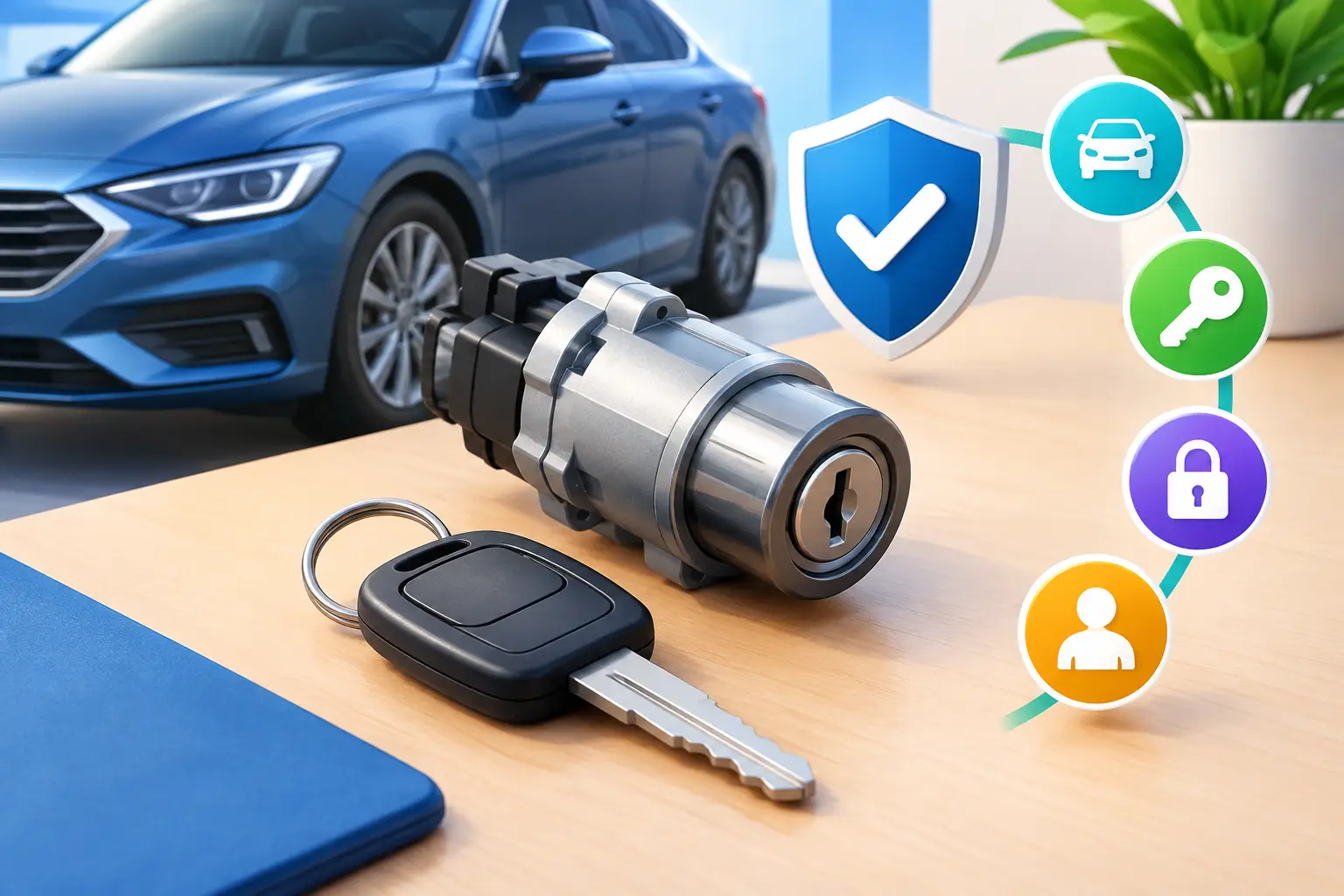
A lost car key creates two problems at once: you need to drive again, and you need to know who might still be able to use the old key. Ignition rekeying results address the security side of that situation by changing which mechanical key can turn your ignition. The right result is not simply a newly cut key. It is a vehicle that starts reliably, has access points that work as intended, and is no longer operating on the old key pattern.
For many drivers, especially those with late-model Toyota or Lexus vehicles, the job may also involve an immobilizer chip, remote functions, or smart-key programming. That is where a professional assessment matters. The ignition cylinder and the vehicle's electronic security system can be related, but they are not always the same repair.
What ignition rekeying actually changes
Traditional ignition rekeying changes the internal pins or wafers inside the ignition lock cylinder so a different mechanical key operates it. In plain terms, the ignition is reset to accept a new key cut instead of the old one. If someone finds or keeps the previous mechanical key, that key should no longer turn the rekeyed ignition.
This can be a practical option after a key is stolen, after a used-vehicle purchase with an uncertain key history, or when a driver wants to restore control without replacing every lock component. It can also help when an ignition cylinder has wear-related key operation problems, although rekeying is not always the cure for a damaged cylinder.
A quality rekey is precise work. The cylinder must be removed and serviced correctly, the new key must be cut accurately, and the ignition must turn smoothly through its normal positions. A key that works only after jiggling, forcing, or repeated attempts is not a finished result.
Ignition rekeying results depend on your vehicle's key system
The biggest source of confusion is assuming that a mechanical rekey automatically handles every part of a modern vehicle key. It does not. Most current vehicles use more than a metal key blade.
A transponder key contains a chip that communicates with the immobilizer. A remote fob controls lock, unlock, panic, and sometimes remote start functions. A smart key may allow push-button start when the vehicle recognizes its encrypted signal. These systems need their own programming or registration process.
That means a newly rekeyed ignition can accept a new mechanical key while the car still will not start until the correct transponder or smart key is programmed. The reverse can also be true: a programmed smart key may start a push-button vehicle, while its emergency blade still does not match an existing mechanical door lock. The final service plan depends on the model year, trim, and the way the vehicle was built.
For Toyota and Lexus owners, this distinction is especially relevant. Many models use advanced immobilizer and smart-key systems, and all-keys-lost situations can require security data work in addition to cutting a replacement key. The goal is to make the process feel straightforward, but the electronic work should never be skipped just because the physical key looks simple.
What a successful result should look like
After the work is complete, the new key should turn the ignition without sticking or excess play. If the vehicle uses a transponder system, it should start consistently and the security indicator should behave normally. If remote or smart functions are included in the service, locking, unlocking, trunk release, proximity detection, and push-button start should be tested before the technician leaves.
Just as important, the old mechanical key should no longer operate the rekeyed ignition. When lost or stolen electronic keys are removed from the vehicle's authorized memory, those keys should no longer start the vehicle electronically either. This is the security outcome most drivers are looking for.
Rekeying versus replacing the ignition
Rekeying and ignition replacement are different services. Rekeying uses a serviceable existing cylinder and changes its key pattern. Replacing the ignition means installing a different cylinder or ignition assembly because the current one is damaged, worn beyond repair, unavailable for rekeying, or otherwise unsuitable.
Rekeying can be less invasive when the cylinder is in good condition. It may also help keep the vehicle's hardware consistent instead of introducing a separate ignition key from the door locks. But it is not automatically the least expensive or best answer in every case.
If the key will not turn because the cylinder is physically failing, internal components are broken, or the ignition assembly has an electronic fault, replacement may be necessary. If a vehicle has a steering-column ignition component that is difficult to access, labor can affect the decision as well. A proper diagnosis should come before a promise that rekeying alone will solve the problem.
Will the doors, trunk, and glove box match?
Sometimes they will, and sometimes they will not. This depends on which locks are rekeyed and whether they are serviceable. A driver who rekeys only the ignition may end up with one key pattern for the ignition and another for a mechanical door lock. That may be acceptable on a push-button-start vehicle where the emergency blade is rarely used, but it is less convenient during a dead key-fob battery situation.
For the cleanest setup, ask whether the ignition, door lock, trunk lock, and emergency key can be matched to one new mechanical key. It is not always possible or necessary, especially on vehicles with damaged locks or limited parts availability. Still, it is worth discussing before the work begins rather than discovering later that two keys are needed.
The same applies to replacement key shells. Moving electronics into a new shell can restore buttons and improve the feel of a worn key, but it does not change the mechanical key cut or program the chip by itself. A shell is useful when the internal electronics are still good. It is not a substitute for rekeying or programming.
When lost keys require more than rekeying
If your key was misplaced in a low-risk place and you still have a working spare, you may only need a duplicate and a little peace of mind. If it was stolen with documents showing your vehicle information, dropped near your home, or lost in circumstances that make recovery likely, security should take priority.
In those cases, the strongest approach may include rekeying mechanical locks, cutting new keys, programming replacement transponder or smart keys, and deleting missing keys from the vehicle's memory when supported by the system. This reduces the chance that an old key can be used later.
An all-keys-lost situation is different again. There is no working key available to copy or use for standard programming. The vehicle may require key data retrieval, immobilizer reset procedures, or advanced programming equipment. It is a job for an automotive key specialist, not a generic hardware-store key counter.
Questions to ask before approving the job
You do not need to know locksmith terminology to make a good decision. Ask whether the quoted service includes the mechanical key cut, ignition rekeying, transponder or smart-key programming, and removal of lost keys from the vehicle's memory. Also ask which locks will match the new key and whether all functions will be tested on site.
Provide the make, model, year, location, and a clear description of what happened. Mention whether the key is lost, stolen, broken, intermittent, or locked inside the vehicle. If you have any remaining key, bring it out for inspection. A working spare can change the available options and often makes the service faster.
Smartkeys handles modern automotive key issues with mobile service designed around the vehicle you have and the access problem you are facing. The right repair is the one that restores dependable driving while addressing the level of security your situation actually calls for.
If you are dealing with a missing or unreliable key, do not wait until the only key fails or disappears. Keep a tested spare, and when security is in question, make sure the repair covers both the metal key and the electronic system that allows your vehicle to start.