






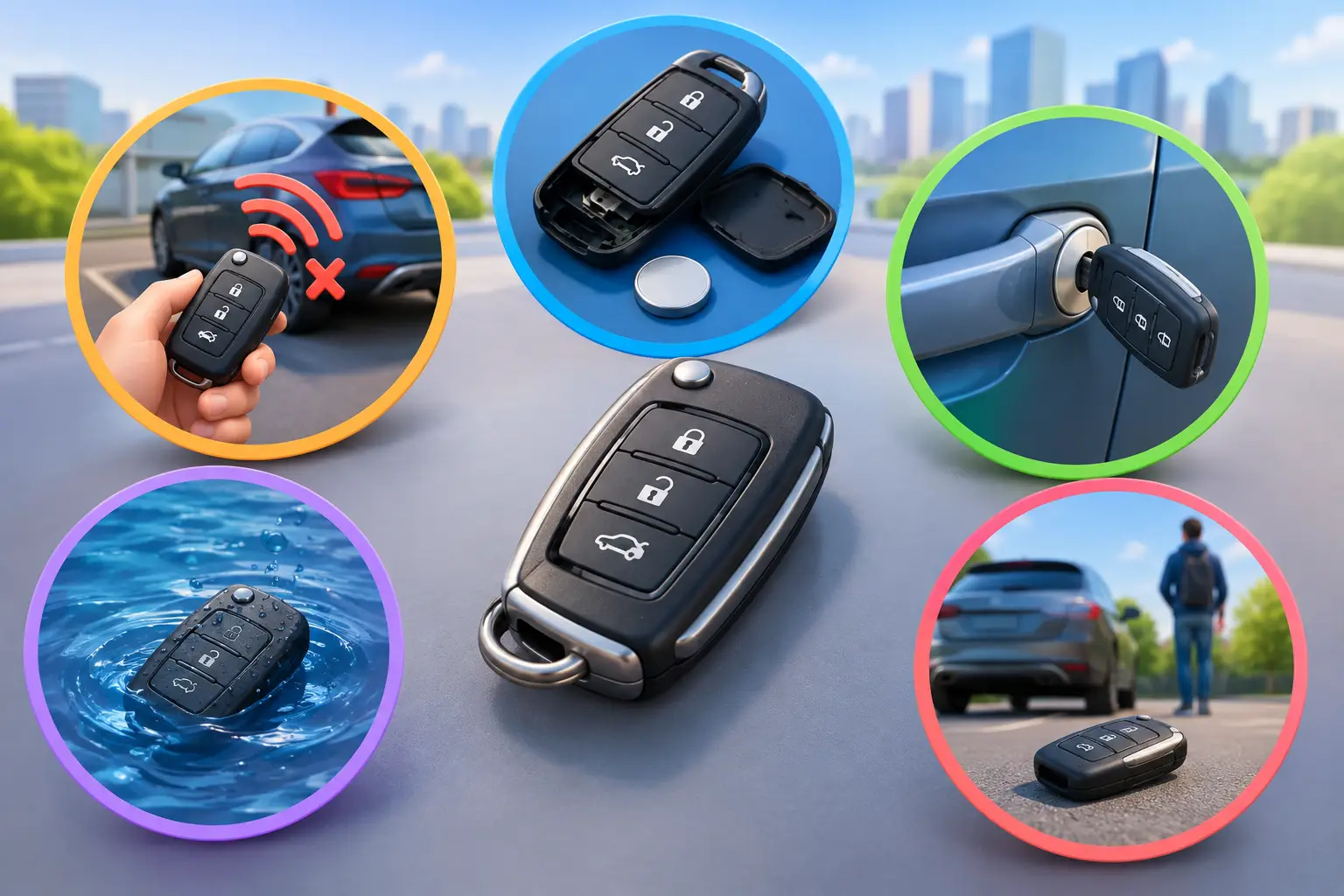
A car key problem rarely happens when you have extra time. It happens in a grocery store parking lot, outside work, during school pickup, or minutes before a rideshare shift. These five car key emergencies can stop your day quickly, but the right next move can protect your vehicle, your wallet, and your schedule.
Modern vehicle keys are more than cut metal. Smart keys, remote fobs, transponder keys, and immobilizer systems all need to communicate with the vehicle correctly. That means a quick fix that works on an older mechanical lock may not work on a newer Toyota, Lexus, or other push-button-start vehicle.
Five Car Key Emergencies and the Right Response
1. Your keys are locked inside the car
This is the emergency everyone hopes will be simple. Sometimes it is - especially if the vehicle is older and the key is visible on the seat. But forcing a door open with a coat hanger, wedge, screwdriver, or online “hack” can damage weather stripping, door panels, window regulators, side airbags, or the locking system itself.
First, check every door and the trunk without pulling aggressively on the handles. If you have a second smart key at home, a family member may be able to bring it. Some vehicles also offer app-based access, but do not rely on it if the car battery is weak or the system was never set up.
If those options are unavailable, call an automotive locksmith equipped for vehicle entry. A trained technician can open the vehicle with the proper tools and avoid turning a lockout into bodywork or electrical repairs. If a child or pet is locked inside a hot or cold vehicle, call 911 immediately. That situation is not a standard lockout.
2. Your smart key fob suddenly will not work
You press unlock and nothing happens. You place the fob in the vehicle and the dashboard says “Key Not Detected.” Before assuming the key is ruined, separate the fob problem from a vehicle problem.
A weak coin-cell battery is a common cause. Many smart keys have a hidden emergency key inside the fob that can unlock the driver’s door manually. Your owner’s manual can show the emergency key release and the backup starting location, which is often near the start button or in a designated console area. On many push-button vehicles, holding the fob close to the start button can allow the car to recognize it even when the fob battery is low.
There is a trade-off: replacing a battery is reasonable if you are comfortable opening the fob carefully and have the correct battery. Prying the shell apart with the wrong tool can crack the case, damage the circuit board, or loosen internal buttons. If the fob has been dropped, exposed to moisture, or has intermittent range, the issue may be more than a battery.
A locksmith who works with electronic keys can test the fob, inspect the shell and buttons, and determine whether the key needs a battery, repair, replacement, or programming. The goal is not just to get the doors open once. It is to make sure the vehicle recognizes the key consistently.
3. Your key is damaged, wet, or broken
A bent emergency key, cracked smart-key shell, loose button, or water-damaged fob can become urgent fast. A key may unlock the door but fail to start the vehicle. In other cases, the remote works while the immobilizer chip no longer communicates with the car.
Do not keep forcing a bent metal key into the ignition or door lock. It can snap inside the lock cylinder, creating a more complicated repair. If a fob gets wet, avoid repeatedly pressing buttons or trying to charge, heat, or microwave it. Heat can warp plastic and damage sensitive electronics. Remove it from water, dry the exterior gently, and have it inspected as soon as possible.
A worn key shell is not always a programming problem. Sometimes the original electronics are still good and can be transferred into a replacement shell. That can be a practical, lower-cost option when the buttons are torn, the case will not stay closed, or the emergency key blade is loose. But if the circuit board, transponder, or crypto electronic components are damaged, a replacement key may need cutting and programming to match the vehicle.
4. Your car will not recognize the key after a battery change or repair
This is frustrating because the key can look perfectly normal. You may unlock the car, but it will not start. Or the car starts one day and rejects the same key the next. Modern immobilizer systems are designed to prevent unauthorized starting, so a vehicle will not simply accept a new remote because it has the same shape.
Start with the obvious checks. Make sure the battery was installed in the correct direction, the contacts are clean, and the fob case is fully closed. If you have a spare key, test it. When the spare works and the primary key does not, the problem is likely isolated to the damaged key or its programming. When neither key works, the issue may involve the vehicle battery, antenna, module, or another vehicle-side concern.
This is where generic key-copy services can fall short. A modern replacement often requires the correct frequency, chip type, key blade, and programming procedure for the make, model, and year. Lexus and Toyota keys, in particular, can involve advanced security and smart-key systems. The wrong aftermarket fob may look similar but fail to program or offer limited functions.
A specialized automotive locksmith can identify the right key type and program it to communicate with the immobilizer. That is often faster and more convenient than towing the vehicle or waiting through a dealership replacement process.
5. You have lost every working car key
Losing the only key is the emergency that creates the most stress. You cannot drive to get help, and you may worry that the missing key could be used to access the vehicle. Take a breath, then focus on the information a key specialist will need.
Have these details ready:
- Your vehicle’s make, model, and year
- Your current location and whether the car is accessible
- A photo of the vehicle identification number if available
- Proof that you own or are authorized to access the vehicle
- Whether it uses a traditional key, remote key, or push-button start
An all-keys-lost service is not just cutting a new blade. The new key must be programmed so the vehicle can start, and the missing keys may need to be removed from the vehicle’s memory. That last step matters. If a lost smart key is still active, someone who finds it may be able to unlock or start the car depending on the vehicle and its settings.
For newer vehicles, the process can involve accessing the immobilizer, retrieving security information, generating the correct key, and programming it on-site. It depends on the vehicle, the security system, and whether the car’s modules are communicating properly. This is not the moment to buy a random key online and hope it works. An uncut, unprogrammed fob is not a replacement key yet.
How to Make the Next Emergency Less Expensive
The easiest key emergency is the one you planned for before it happened. Once you are back on the road, get a working spare key made and test it before storing it. Keep it somewhere secure, not inside the vehicle and not attached to the primary key ring.
If your fob is aging, has weak buttons, or needs a case held together with tape, address it before it fails. A replacement shell, fresh battery, repaired remote, or duplicate programmed key costs less and causes less disruption than an after-hours all-keys-lost call.
For drivers who depend on their car every day, a spare is not an accessory. It is backup transportation. Smartkeys can help with replacement, repair, cutting, and programming when your key quits or disappears, including advanced smart-key and immobilizer work.
When a key emergency hits, avoid forcing the vehicle, protect your proof of ownership, and get the right vehicle information ready. The fastest route back behind the wheel is usually a calm first step followed by the right automotive key specialist.