





Your keys disappear from a gym locker, a work site, or a restaurant parking lot. The immediate problem is getting back on the road. The bigger question comes next: can locksmiths rekey your car so the missing key cannot be used later?
The short answer is yes, but automotive rekeying is not always the same as rekeying a house lock. Modern vehicles use a combination of mechanical locks, transponder chips, remote fobs, smart keys, and immobilizer systems. The right solution depends on what kind of key you drive with, whether a spare key is still available, and whether the lost key creates a real security concern.
Can Locksmiths Rekey Car Keys?
A qualified automotive locksmith can often rekey the mechanical door and ignition locks on a vehicle. This changes the lock's internal configuration so an old physical key will no longer turn it. The locksmith then cuts a new key to match the updated lock.
For many late-model vehicles, though, mechanical rekeying is only one part of the job. A chipped transponder key or proximity smart key has to be electronically authorized by the vehicle before it can start the engine. If the old key is lost or stolen, the locksmith may need to remove it from the vehicle's authorized-key memory, then program new keys that work with the immobilizer.
That distinction matters. A new key can be cut and programmed without changing the physical locks. That gets you driving again, but it may not stop a lost metal key from opening the door or turning a mechanical lock. Conversely, rekeying a lock cylinder alone does not automatically prevent an old programmed smart key from starting the vehicle.
For the strongest result after a theft or serious loss, ask for both parts of the security check: mechanical lock rekeying where appropriate and electronic removal of missing keys from the vehicle's system.
When Rekeying Is the Right Move
Rekeying makes the most sense when someone who should not have access may have your key. A purse stolen with a driver license, a key lost near your home, an employee who did not return a fleet key, or a used vehicle purchased with an uncertain key history are all good reasons to consider it.
If you simply misplaced a key in your own home and have a working spare, a duplicate may be the more practical and affordable choice. In that case, replacing the missing key and programming an extra can give you a backup without the cost of changing lock cylinders.
The decision also depends on the vehicle. Some cars have a conventional metal ignition key and separate remote. Others use a transponder key that looks ordinary but contains a chip. Many newer Lexus and Toyota models use smart proximity keys, where the driver starts the car with a push button while the fob stays in a pocket or bag. Each setup calls for a different security response.
Traditional Keys and Mechanical Locks
Older vehicles with basic metal keys are the most straightforward candidates for physical rekeying. A locksmith can decode the existing lock, rebuild or replace the cylinder as needed, and cut a new key. The previous key will no longer operate the rekeyed lock.
There can still be trade-offs. Door locks, trunk locks, glove box locks, and the ignition may not all use the same keying arrangement on every vehicle. If only one cylinder is changed, you could end up carrying more than one mechanical key. A skilled automotive locksmith can explain whether matching all accessible locks is practical for your specific make and model.
Transponder Keys and Smart Keys
With transponder and smart-key vehicles, the immobilizer is the real line of defense against someone starting the car. The metal blade may turn the ignition or open a door, but the engine will not run unless the correct chip or smart credential is recognized.
When a programmed key is missing, the locksmith can often reset, erase, or update the authorized-key list, then register the keys you still have or newly supplied replacements. The exact process varies by year, model, security system, and available key data. It is not a one-size-fits-all service, especially when every working key has been lost.
On a modern push-button-start vehicle, the practical equivalent of rekeying may be deleting the missing fob and programming new smart keys. Physical lock rekeying can be added if the emergency key blade or door-lock access is also a concern.
What an Automotive Locksmith Actually Does
A professional locksmith does more than cut a new piece of metal. The service starts by confirming ownership and identifying the exact vehicle, including make, model, year, and key type. That information determines whether the job requires a standard cut key, transponder programming, a smart fob, lock-cylinder work, or a combination of services.
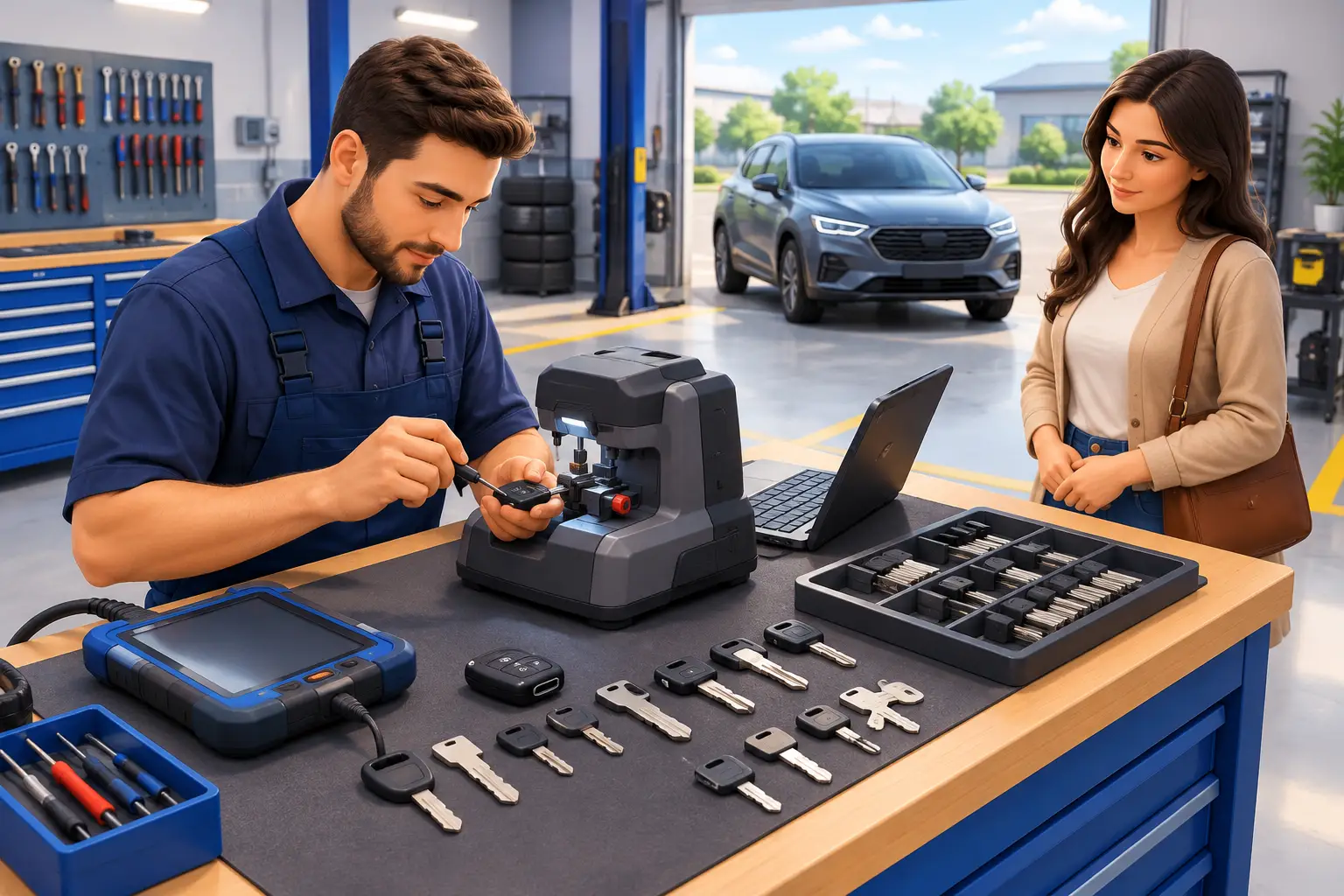
The locksmith may retrieve key-cut information, create a new mechanical key, inspect the locks, and connect professional diagnostic equipment to communicate with the vehicle's security system. For electronic keys, the goal is to program a working replacement while protecting the immobilizer and making sure the old missing credential is addressed when security requires it.
If all keys are lost, the work can be more involved. There is no working key available to copy, and some systems require advanced programming procedures. That is where an automotive specialist matters. Smartkeys focuses on current vehicle key technology, including transponder keys, smart fobs, immobilizer programming, and all-keys-lost situations for Lexus and Toyota owners.
Rekeying vs. Replacing a Car Key
The two services solve different problems. Replacing a key restores access and lets you drive. Rekeying changes physical lock access. Programming or deleting keys controls electronic start authorization.
If a key is damaged, has a weak remote battery, broken buttons, or a cracked shell, replacement or repair is usually enough. If the key was stolen with identifying information, it is wiser to discuss electronic deauthorization and mechanical rekeying. If you bought a pre-owned vehicle with only one key, programming a second key is often the first priority, while rekeying is worth considering if you do not know who may still have an old key.
Do not assume a dealership is the only option. A qualified mobile automotive locksmith can often come to the vehicle, supply a compatible key or fob, cut the emergency blade, and perform required programming on-site. Availability and price depend on the vehicle's security system, but mobile service can avoid towing, long waits, and the inconvenience of being without transportation.
Cost and Timing: What Changes the Job
There is no honest flat answer for every car. A basic duplicate key is typically simpler than an all-keys-lost smart-key job. Rekeying multiple lock cylinders adds labor and parts. Advanced immobilizer procedures, high-security keyways, and late-model proximity systems can also affect the cost.
Before authorizing service, provide the vehicle year, make, model, location, and a clear description of what happened. Let the locksmith know whether you have a working spare, whether the missing key was stolen, and whether the vehicle has a push-button start. Those details help the technician recommend the right service instead of selling you work you do not need.
Fast service should not mean skipping security. If someone has your old key, ask directly whether it can still start the vehicle after the replacement is programmed. Ask whether the mechanical locks will still accept the old blade. Clear answers prevent an unpleasant surprise later.
Keep the Next Key Problem Smaller
Once the vehicle is secure, make the next emergency easier to handle. Keep one working spare in a safe location away from the vehicle, not in the glove box. Replace a worn key shell before the internal circuit board is damaged. Test your spare occasionally, especially if it is a smart fob that has been sitting unused.
If you use your vehicle for rideshare work, family transportation, or daily commuting, having two active keys is not a luxury. It is a practical way to avoid a stranded day, a tow, or an urgent all-keys-lost service call.
A missing car key is stressful, but it does not have to leave your vehicle exposed. The best next step is to match the service to the actual risk: replace what is broken, duplicate what is needed, and when security is in question, make sure both the locks and the vehicle's electronic authorization are handled.