






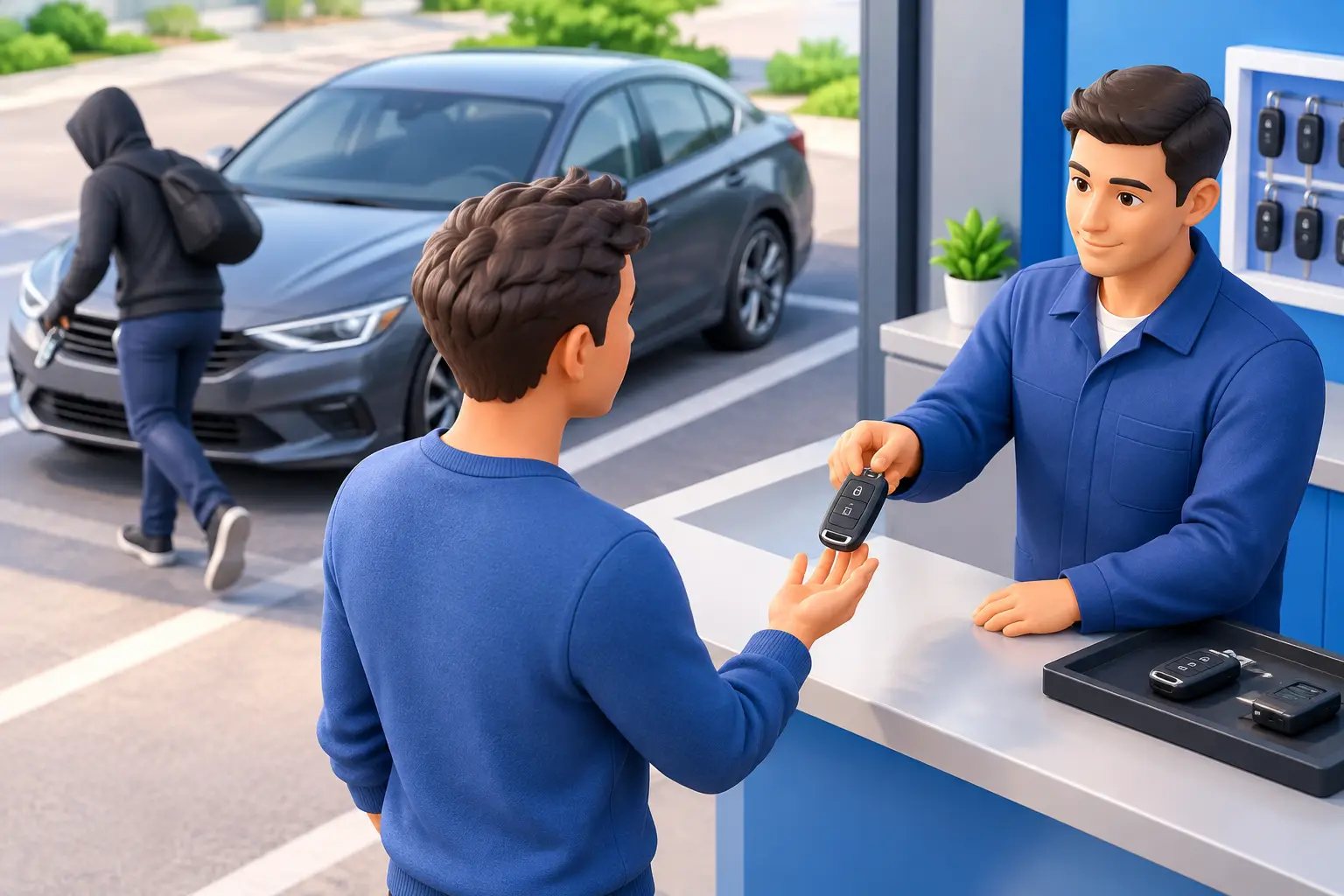
A stolen wallet is frustrating. A stolen wallet with your car keys, registration, and home address can become a vehicle-security problem fast. When you need to replace stolen car keys, the goal is not simply getting another fob in your hand. You need to make sure the stolen key can no longer start your vehicle.
Modern keys are electronic credentials. A smart key, remote fob, or transponder key may still work from blocks away, even if the thief never has your vehicle in sight. Acting quickly can protect your transportation, reduce the chance of theft, and get you back behind the wheel without waiting weeks for a dealership appointment.
First, protect the vehicle
If you know or suspect your keys were stolen, park the vehicle somewhere secure as soon as possible. A locked garage is ideal. If that is not available, choose a well-lit location with cameras or controlled access. Do not leave the vehicle in the same predictable place if the stolen items included paperwork showing your address or usual workplace.
Call law enforcement if the theft occurred during a burglary, robbery, car break-in, or a situation where personal information was taken. A police report may help with an insurance claim and creates useful documentation if the vehicle is later targeted.
Then gather what you have: your driver's license, vehicle registration or title, VIN, make, model, year, and any remaining working key. A locksmith will use this information to identify the correct key type and confirm ownership before cutting or programming a replacement.
If a spare key is at home, resist the temptation to treat it as the whole fix. It will get you moving, but it does not remove the stolen key from the vehicle's memory.
Replace stolen car keys and erase old access
The right service depends on the vehicle and the type of key that was taken. For many late-model cars, especially Toyota and Lexus vehicles, the replacement process involves more than cutting an emergency blade. The new smart key or transponder key must be programmed to communicate with the vehicle's immobilizer system.
Just as important, the lost or stolen key should be deleted from the vehicle's authorized-key list. Once that happens, the old fob may still have a physical key blade, but it should no longer electronically start the vehicle or operate the push-button ignition.
This is why a cheap, unprogrammed fob is rarely a complete answer. It may look identical to the original, but it cannot protect the car or restore full operation until it is correctly matched to the vehicle.
For an older vehicle with a basic metal key, replacement may be straightforward. Yet if the stolen key includes a remote or transponder chip, ask whether the vehicle can be reprogrammed and whether the door or ignition locks should be rekeyed. The best choice depends on the vehicle's security system, the circumstances of the theft, and whether the thief could identify your car.
When rekeying makes sense
Rekeying changes the mechanical lock configuration so the old physical key will no longer turn the door or ignition cylinder. It is especially worth considering when a thief has both the key and information that identifies the vehicle or its location.
Not every vehicle needs a full mechanical rekey. On many newer push-to-start cars, deleting the old smart key and programming new keys may be the priority. A qualified automotive locksmith can explain whether electronic key deletion alone is enough or whether changing mechanical lock access adds meaningful protection.
Choose the replacement route that fits your situation
A dealership can replace keys, but it may require towing the vehicle, an appointment, proof of ownership, and a higher bill. That route can make sense for unusual models, warranty questions, or situations requiring factory-specific parts.
A specialized automotive locksmith is often the faster option when the vehicle cannot be driven or when every key is gone. Mobile service brings key cutting, remote programming, immobilizer work, and testing to the vehicle's location. That can save you the cost and hassle of arranging a tow just to start the replacement process.
The key is choosing a provider equipped for your exact vehicle. Modern automotive access systems use encrypted communication, transponder chips, proximity sensors, and immobilizers. Ask directly whether the locksmith can program your make, model, and year, remove the stolen key from the system, and provide a fully tested replacement.
For Lexus and Toyota owners, Smartkeys can provide mobile support for lost keys, smart keys, transponder keys, key programming, and all-keys-lost situations. The service should leave you with a working key and a clear understanding of what was done to protect the vehicle.
What to expect during the service call
A legitimate replacement process starts with ownership verification. Be ready to show identification and vehicle documentation. If your paperwork was stolen too, tell the locksmith upfront. They can explain what alternative documents may be accepted and what steps are needed before work begins.
Next, the technician identifies the key system. A traditional remote key, a proximity smart key, and an immobilizer transponder key each require different equipment and procedures. The technician may read vehicle data, cut an emergency key blade, program one or more new electronic keys, and remove missing keys from the vehicle's memory.
Before the job is finished, test every function. Lock and unlock the doors, open the trunk or liftgate, use remote start if equipped, and start the vehicle several times. On a push-button vehicle, make sure the key is recognized both inside the cabin and near the door handles. If the replacement includes an emergency blade, verify that it operates the mechanical door lock.
Ask whether you should keep the old spare key, if one exists. In some cases it can be reprogrammed. In others, replacing it with a new matched key is the cleaner security choice.
Avoid shortcuts that create another problem
Online fobs can be useful as replacement hardware, but compatibility is not guaranteed by appearance alone. Part numbers, frequency, chip type, button layout, and vehicle trim can all matter. A fob that looks right may fail to program, work only partially, or leave you without an emergency key blade.
Be cautious with instructions that promise do-it-yourself programming for every car. Some vehicles allow limited remote syncing, but that is not the same as programming a transponder or smart key to the immobilizer. Repeated failed attempts can waste time when you are already dealing with a security issue.
Also avoid sharing photos of your remaining keys, VIN, registration, or key codes on social media or with unverified sellers. Those details can be valuable to someone trying to create unauthorized access to your vehicle.
Check coverage and plan for the next emergency
Depending on the policy, homeowners, renters, auto insurance, roadside assistance, or a credit-card benefit may help with key replacement or locksmith costs. Coverage varies widely, particularly when keys were stolen rather than simply lost. Review your policy before assuming the expense is covered, and keep receipts, the police report number, and service documentation.
Once the immediate problem is solved, get a second working key. A spare is less expensive and less stressful to make while one programmed key is available. Store it somewhere separate from your daily keys, not in the glove box and not attached to paperwork with your home address.
If the theft involved a purse, backpack, or wallet, update any saved vehicle-location apps, garage-door remotes, and account passwords connected to your car. The replacement key is the main priority, but the surrounding access points matter too.
Getting back on the road should not mean wondering whether someone else can still start your car. Replace the key, remove the stolen credential from the vehicle, and test the new setup before you drive away. That extra attention turns an urgent replacement into real peace of mind.